CREATING HAVOK
How a modest team of Dubliners elevated the art of game physics
By Lewis Packwood
`
One of the first things that greets us at Havok’s main office in Leopardstown, about half an hour’s drive south of Dublin city centre, is a Gravity Gun. The model sits on a low table in the reception area, in between two glass cabinets holding trophies, mixed-reality headsets and assorted other memorabilia from Havok’s first 25 years. But the Gravity Gun has earned its place in the spotlight.
Half-Life 2 was a watershed moment for videogames in general, but for Havok, which helped Valve put this fundamental force in the hands of players? “That was something that really showed the world what was possible with using physics as a more integral part of the game, rather than just an additional visual effect,” says David Coghlan, Havok’s general manager, who joined the company in 2003, just before its big breakthrough moment.
Today, the company is housed within the glass-fronted corporate shell of Microsoft’s Dublin campus. Sealed off behind a keycard-accessed barricade, the Havok office is a kind of enclave, branded in yellow and black. Still, separate as it might feel, existing within one of the world’s biggest companies is an awfully long way – figuratively if not geographically – from Havok’s humble beginnings in the computer science department of Trinity College Dublin.
“We were part of a research group that was called the Image Synthesis Group, and a lot of the work was actually about image generation and realtime ray tracing,” says Havok technical director Dave Gargan, one of that initial group. At that point they had yet to work on a videogame; some of their earliest work came from elsewhere.
“One of the projects we were doing was in conjunction with the now-defunct Waterford Crystal,” Gargan says. “They would spend a fortune on trying to cut patterns for glass, and they would actually build mockups of these things. There was a very small number of folks that could actually go and cut the glass – each one was really expensive, and we were trying to simulate it so they could do pilot prototypes.” Of course, that wasn’t where the group’s collective heart truly lay – in addition to that early work, Gargan remembers “an awful lot of time playing Doom, Duke Nukem 3D, Counter-Strike…”
Developing games themselves didn’t really seem like an option, though. “While the UK had a very vibrant games industry in the ’80s, during the 8bit era, that didn’t really exist in Ireland,” Coghlan says. “For markets that didn’t have that track record or history of game development, middleware was a way people passionate about games could actually get involved in the industry.” It was the same context that led to the opening of Keywords Studios, another Leopardstown company set up in 1998, and Irish netcode specialist Demonware, a few years later. “It was feasible to be a viable ten, 20-person middleware company, when in those days it was very, very rare that you’d have a viable game studio of ten to 20 people.”
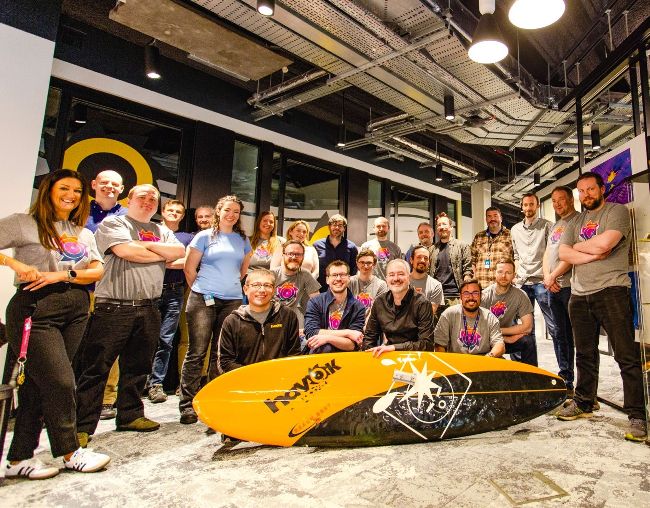
1 David Coghlan gives credit to Microsoft, Havok’s owner since 2015, for its continued autonomy: “There’s certainly a strong sense of identity for people within the Havok team.”
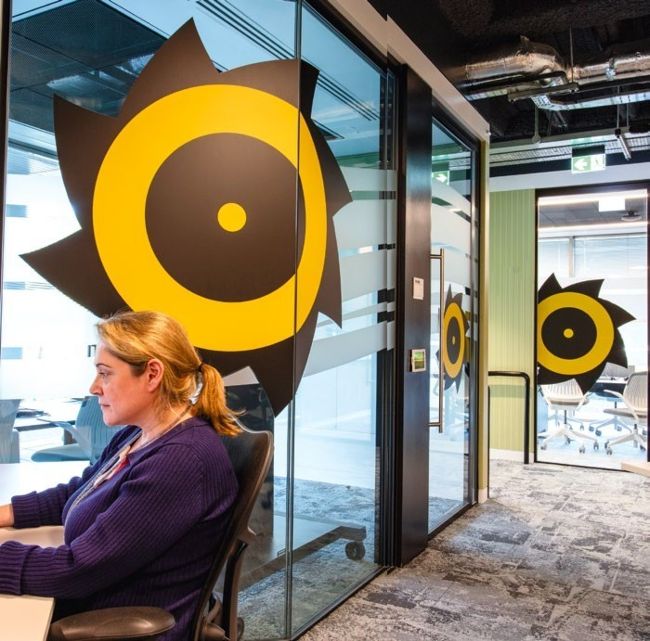
2 The distinctive Havok buzzsaw logo is almost as omnipresent in the Leopardstown office as it once was in games’ opening splash screens.