Taken a DNA test? Now what?
DNA tests are becoming ever more popular but the results can seem bewildering can’t they? Help is at hand, however, with family historian Karen Evans’s practical advice for making sense of your DNA test results for your family history research
Karen Evans
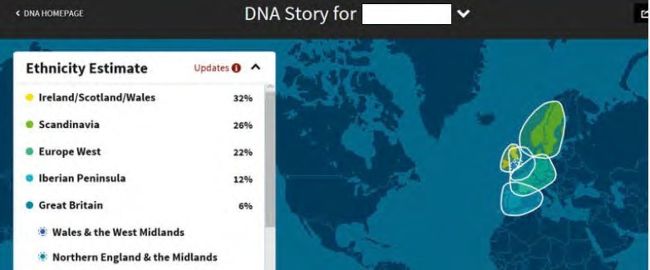
This is the previous ethnicity report for Karen’s dad
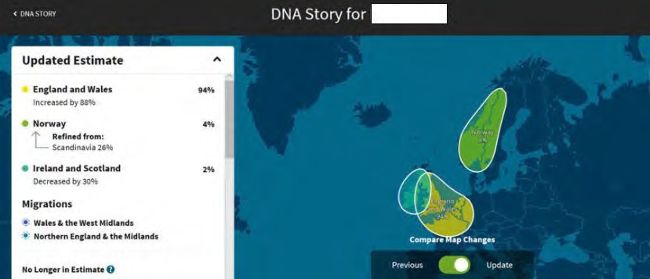
And the updated ethnicity report for Karen’s dad
Once you have received your DNA results, and got over the initial excitement, you will probably look at all the matches with a growing sense of confusion and surprise. In every issue of Family Tree, we will be looking at diTherent DNA conundrums and I hope that this series will help you:
• make sense of your test results
• find family connections worldwide
• and get the answers you need to your DNA questions.
Q What do the ethnicity estimates actually mean?
Reader Maureen Dearnaley writes: In common with many others at present, I have been fascinated to receive the results of my Ancestry DNA test, but have one outcome which I cannot explain.
I have researched my family tree thoroughly over a number of years and can verify, using traditional sources, that the direct ancestors of three of my grandparents have lived in the north-west of England for several generations. This is reflected well in the maps which indicate the geographical sources back to the surprisingly specific 1800. The origins of my fourth grandparent, however, appear to be overlooked. She was born in Kent, coming north about 1900, her own ancestors being found across the south of England from Kent to Devon. While, to a layman, this should have produced a quarter of my genetic makeup, in fact it is totally absent. I would like advice about which is the most likely explanation: