SELF DIAGNOSIS
PATIENT, DIAGNOSE THYSELF!
MENTAL HEALTHCARE IS IN SHORT SUPPLY. IN ITS PLACE, WELL-MEANING ONLINE COMMUNITIES HAVE SPRUNG UP OFFERING SUPPORT, ADVICE AND EVEN DIAGNOSES TO THOSE THAT NEED IT. BUT IS THIS SAFE?
WORDS: DR DEAN BURNETT
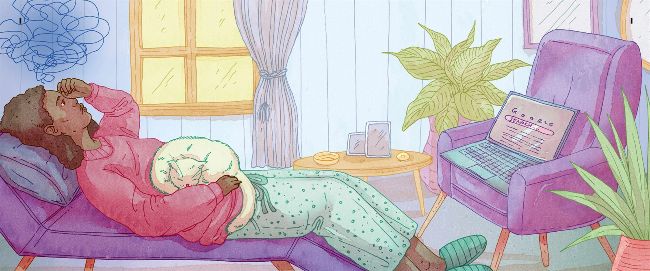
ILLUSTRATION: ELENA GALOFARO BANSH
If you’re struggling with your mental health, what are you meant to do about it? Thanks to many campaigns dedicated to it, ‘awareness’ of mental health concerns is rising all the time. And that’s good. Awareness is only the beginning, however. It’s all well and good to tell people it’s ‘time to talk’, or to insist there’s no shame in asking for help, but what if that help isn’t forthcoming?
This isn’t a hypothetical. For years now, UK mental healthcare has been in a poor state, as damning statistics show. 40 per cent of mental health trusts are dangerously understaffed. Just 14 per cent of crisis patients report receiving all the care they need. Waiting times often stretching to over a year mean 75 per cent of mental health patients have to resort to emergency services, which are already overstretched and ill-equipped to deal with such cases. And despite mental health problems affecting 1 in 6 people, and getting progressively worse all the time, there’s shockingly little enthusiasm from those in power to deal with the issue in any meaningful way, beyond trite slogans and empty promises.
As a result, it’s no wonder that many people end up looking beyond established healthcare systems for help and support. Whether it be via patient communities, online resources, new technologies, alternative therapies, or whatever, you can’t really blame people for taking their mental health matters into their own hands. Because what choice do they have?
An unavoidable outcome of this, however, is that many people who, via the use of the resources they do have access to, end up figuring out their own diagnosis and what to do about it. This is arguably just another manifestation of self-medicating, a practice that’s been around since before mainstream medicine. Unfortunately, self-medication can often make matters worse. Consider how many addictions stem from someone desperate for relief from a pre-existing malady.
The point is, while self-diagnosis of mental health issues is both inevitable, and in many cases essential, it’s often overlooked how, thanks to the way our brains work, it can have negative, harmful outcomes. Particularly in our modern technological world.