Sie sehen gerade die Germany Version der Website.
Möchten Sie zu Ihrer lokalen Seite wechseln?
15 MIN LESEZEIT

BRAINDUMP

Can glass be made from lightning hitting sand?

Amazing answers to your curious questions

SEND YOUR QUESTIONS TO: HOW IT WORKS MAGAZINE @HOWITWORKSMAG HOWITWORKS@FUTURENET.COM HOWITWORKSMAG

Did you know?

Lake Maracaibo has lightning 300 nights a year
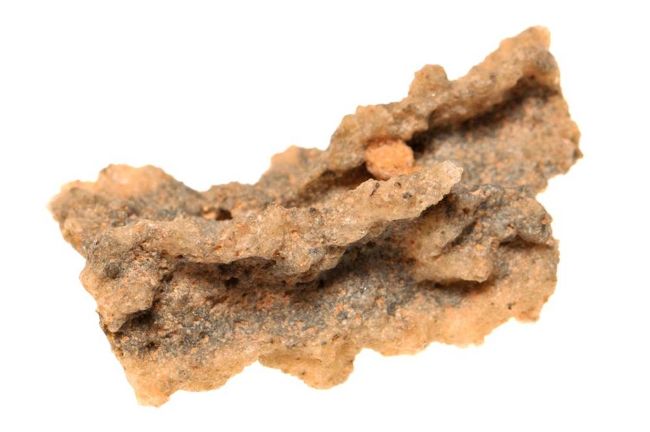
Fulgurite is formed from sand or other sediment fused by lightning

This is indeed possible, as glass and sand are both made from the same chemical: silicon dioxide. Silicon dioxide has an extremely high melting point, so first the sand has to be heated past this for it to become a liquid. In sand the silicon and oxygen atoms are arranged in a very orderly way. When sand is heated to very high temperatures, this arrangement breaks down and the position of the atoms becomes disorderly and random.

If the sand is cooled quick enough then the atoms of oxygen and silicone don’t have enough time to revert back to their nice orderly arrangement so they form the substance we know as glass. When lightning occurs, the strike point can reach temperatures of up to 30,000 degrees Celsius, which is much hotter than the surface of the Sun. Providing the sand is of the right kind, it’s possible that glass will form. Fulgurite is the term given to what is left over, which is a hollow glass tube, and a strike can sometimes penetrate up to 15 metres below the surface of the sand. The type of sand the lightning strikes is a major factor as to whether it will turn into glass or not. Meteorite impacts have also been known to release a large enough amount of energy to convert sand into glass.

Due to the unpredictable nature of lightning strikes, and given that they can be highly dangerous, it might be a risky business opportunity in more than just the financial sense. On average there can be more than 100 lightning strikes happening every second across the globe, but the chances of these being over the right type of sand at exactly the right moment are very low, so don’t get your hopes up!

WHY DO SKUNKS SMELL?

Skunks are renowned for their ability to smell really bad. Not something you want to have associated with your species, but for skunks it’s a massive advantage. Skunks do this by spraying a chemical, or thiol, which is made of sulphurous compounds, and they have a very strong odour. Not only that, but these thiols are very good at sticking to materials and mixing with chemicals to make the smell stick. If a skunk has sprayed this on any of your upholstery or clothes, the smell can often last for weeks. In fact, scientists have successfully isolated the compounds that make the smell stick and applied it to perfumes and fragrances in order to give a longer lasting smell.

Schalten Sie diesen Artikel und vieles mehr frei mit
Sie können genießen:
Genießen Sie diese Ausgabe in voller Länge
Sofortiger Zugang zu mehr als 600 Titeln
Tausende von früheren Ausgaben
Kein Vertrag und keine Verpflichtung
Versuch für €1.09
JETZT ABONNIEREN
30 Tage Zugang, dann einfach €11,99 / Monat. Jederzeit kündbar. Nur für neue Abonnenten.


Mehr erfahren
Pocketmags Plus
Pocketmags Plus

Dieser Artikel stammt aus...


View Issues
How It Works
Issue 161
ANSICHT IM LAGER

Andere Artikel in dieser Ausgabe


WELCOME
WELCOME
Issue 161
HOW IT WORK
MEET THIS ISSUE’S EXPERTS
ANDY EXTANCE Andy is a science writer. He
AR ZONE
Bring the pages to life
REGULARS
Ghostly sea slugs
© Getty Meet Coryphella verrucosa , the translucent sea
We have liftoff
© ESA It’s been one of the most
Spreading seeds
© Getty This is a scanning electron microscope
South America’s watery border
© NASA-JSC This is the Paraná River, a
Your eyes reveal your true age
GLOBAL EYE Showcasing the incredible world we live
ANCIENT CHINESE WARRIORS WERE BURIED ALIVE
A view of the city of Anyang in
Iceberg dumps 132 billion tonnes of water into the ocean
The huge iceberg calved from the Antarctic Peninsula’s
Black holes could explain the universe’s origins
This galaxy gives off a type of radiation
REIGN OF NEW MONKEY QUEEN IS IN JEOPARDY
A Japanese macaque bathing in a hot spring
Antarctic penguin colony concerns scientists
The newfound colony has 75 gentoo penguin nests
‘GATES OF HELL’ MAY FINALLY BE CLOSED
The leader of Turkmenistan would like to finally
‘Death Star’ moon’s secret underground ocean
The Cassini spacecraft’s camera snapped this image of
Astronomers watch a star explode in real time
An artist’s illustration of a red supergiant ©
Modern humans lived in Africa 38,000 years earlier than thought
A reconstruction of the Omo I skull discovered
Sunbird songs are a million years old
A double-collared sunbird is a tiny, colourful bird
RABIES DEATHS IN THE US SPARK WARNING
One of the cases involved exposure to a
WISH LIST
The latest VR HEADSETS
THE EXTRAORDINARY WORLD OF BIRDS
The latest book releases for curious minds
Spot the difference
See if you can find all six changes between the images below
MAKE A THUNDERSTORM IN A TANK
Create this mesmerising visualisation of a turbulent sky
INBOX
Speak your mind
FAST FACTS
Amazing trivia that will blow your mind
SPECIAL
ALL ABOUT THE INTERNET
Discover how you can access images and information all over the world – and even beyond – at the click of a button
STEP BY STEP
Wired internet connections are up to ten times
HOW DO WEBSITES WORK?
DID YOU KNOW? On average, internet users spend
WHAT IS THE INTERNET?
This giant network can seem almost ethereal. For
NEED FOR SPEED
DID YOU KNOW? Google handles over 3.5 billion
THE FUTURE OF THE INTERNET
DID YOU KNOW? The average person spends 2
CONNECTING THE WORLD
1966 The US Defence Agency funded the Advanced
TECHNOLOGY
WHAT ARE THE JAWS OF LIFE?
These emergency tools are a firefighter’s valuable companion during crash recoveries
HOW BLUETOOTH WORKS
Inspired by a Nordic king and harnessing the power of radio, here’s how wireless connectivity reshaped our electronic ecosystems
HISTORY
WHAT THE ROMANS TAUGHT US
How ancient Roman technologies have influenced the modern world
PYTHAGORAS OF SAMOS
This ancient Greek polymath’s life is shrouded in mystery
ENVIRONMENT
15 OF THE BIGGEST BIRDS ON EARTH
Explore the fascinating lives of our planet's feathered giants
HOW DO FISH BREATHE?
Discover how aquatic animals use their gills to breathe underwater
HA LONG BAY EXPLORED
How this stunning Vietnamese bay developed such distinctive geology
SCIENCE
SECRETS OF DIAMONDS
What are these sparkling, harder-than-rock gems? Where do they come from and why are they so special?
HOW CANCER IS DIAGNOSED
This disease can affect any part of the body, requiring robust methods to detect and classify it
INSIDE A BIONIC EYE
With over 160 million people suffering from some type of sight loss, bionic eyes could be the solution to one of the most pressing medical issues of our time
SPACE
THE USS ENTERPRISE?
Discover the real-world and theoretical technologies of Star Trek’s flagship spacecraft
FUELLING THE FUTURE
How to make a spaceship move faster than the speed of light
ALL ABOARD THE USS ENTERPRISE
How this Star Fleet spaceship could be brought to life with real world technology
WHAT ARE SATURN’S RINGS MADE OF?
Billions of icy particles orbit this gas giant to create its iconic shape
TRANSPORT
CAR CENTRAL LOCKING EXPLAINED
Locking the doors on a car may seem simple, but it’s a critical vehicle security feature
WHAT IS BIOFUEL?
Biofuels are futuristic fuels that can power cars and trucks with crops, algae and even rubbish. Here’s how they’re produced
Chat
X
Pocketmags Unterstützung