ENVIRONMENT
SUSANNE MASTERS
White-clawed crayfish (Austropotamobius pallipes)
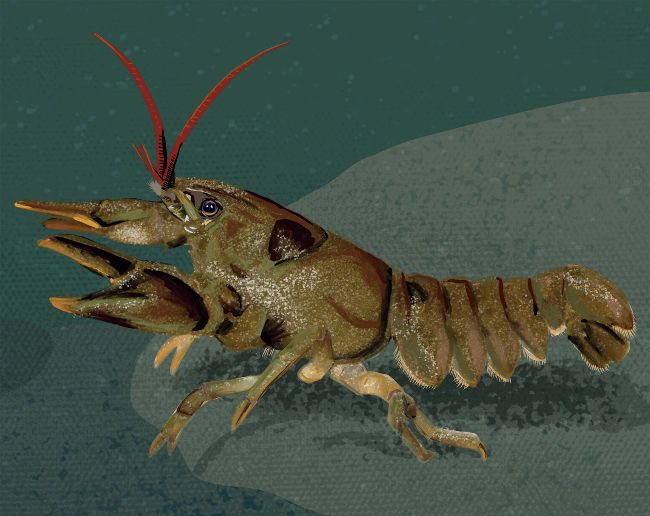
Illustration: Alice Goodridge
WILD LIFE
While Noah built a boat as a refuge, for white-clawed crayfish the way to preserve the species is aquatic Arks, bodies of water where they can be kept separate from introduced signal crayfish (Pacifastacus leniusculus). Signal crayfish entered wild water in Britain as escapees from being farmed for food. They outcompete native crayfish and also carry crayfish plague, which has 100% mortality for white-clawed crayfish. Setting traps to remove signal crayfish isn’t a solution because traps predominantly catch large signal crayfish. But signal crayfish breed before they attain trappable size. Because large crayfish eat their smaller brethren, removing these cannibalistic signal crayfish may encourage their populations to grow.
Developing Arks where plague-free white-clawed crayfish are translocated to live isolated from signal crayfish is helping to save them from extinction. Flooded quarries, gravel pits, and other mineral extraction sites can be suitable as they are not connected to watercourses that signal crayfish can travel through.