Big Generator
From the dark, turbulent and challenging ways of early Van der Graaf Generator to, er, the same now. It an article from Prog 21, we look at how frontman Peter Hammill has tirelessly produced solo work that’s as uncompromising and distinctive as it is contemporary and pioneering.
Words: Dom Lawson
“People who don’t know about me often think I’m a miserable bastard who moans on about dark stuff all the time, a bit prog and what have you. But for me, one of the functions of music is to be there and to be something that people can turn to when they need a bit of help. I listen to a lot of classical music and there’s a lot of excruciatingly sad music within that, but it can make you feel incredibly uplifted. In my own small way, that’s what I try to do.”
One barely needs to listen to more than a minute or two of Peter Hammill’s music - whether that be any of his 35 studio albums as a solo artist or any of the records made by the various incarnations of his band, Van der Graaf Generator - to learn the undeniable truth that he is one of the most unique and fascinating figures in modern music. That sonorous, multi-octave voice, that perennial air of impassioned intelligence, the vast spectrum of sounds and styles that he has joyfully employed for the past 40 years: Hammill is both the quintessential progressive rock musician and, with typical contrariness, a million miles away from anyone else the genre has ever claimed as its own.
“It’s all just music and you fiddle around with it until it feels right and then off you go.”
Peter Hammill
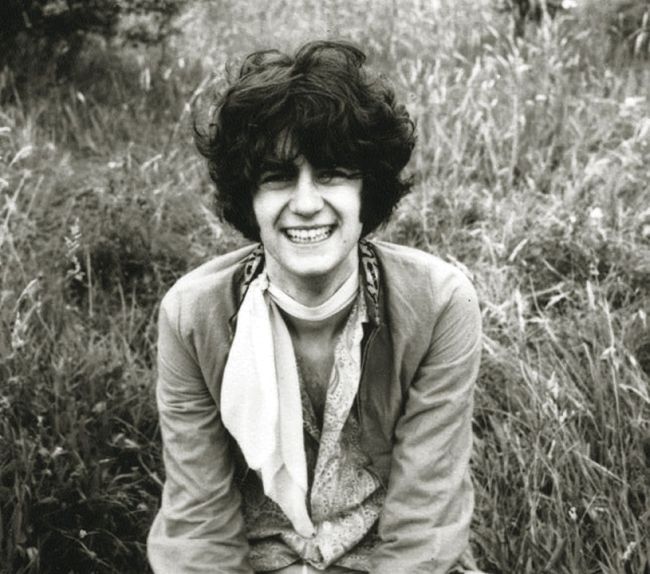
Hammill in 1969, around the time of The Aerosol Grey Machine.
PRESS/ESOTERIC
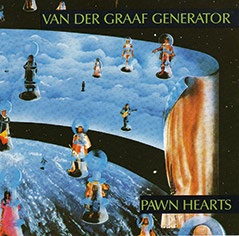
Pawn Hearts (1971).
MYKEL NICOLAOU/SHUTTERSTOCK
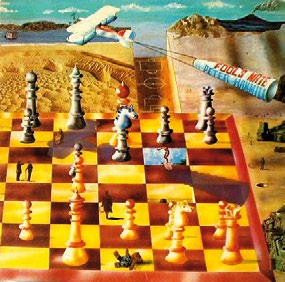
Fool’s Mate (1971).
Born in 1948, Hammill began writing what he describes as “attempts at blues songs” at the tender age of 15 (“Without any of the required life experience or musical ability,” he laughs today) before ending up at Manchester University where he joined forces with Judge Smith and formed the first version of Van der Graaf Generator. Signed to Mercury Records in 1968, both individually and as sole representative of his band, he took inspiration from the wild tangents pursued by contemporary visionaries like The Beatles, Ray Davies and Pete Townshend as they outgrew their beat group origins and started to plough newer, more adventurous furrows. It was clear from the start that Van der Graaf Generator were only nominally affiliated with the then-burgeoning progressive rock scene; their music was dark, turbulent and challenging; their performances wrought with an aggression and otherworldly perversity that their peers could only gawp at in envious horror. But it was when the band split (for the first time) in 1972, shortly after the release of their masterpiece Pawn Hearts, that Hammill’s career as a solo artist began to take shape and the idiosyncratic purity of his voice started to resound. His first solo album, Fool’s Mate, had emerged some time before as a clearing of the compositional decks, but it was his next three albums that marked the beginning of his remarkable artistic journey. Chameleon In The ShadowOf The Night, The Silent Corner And The Empty Stage (both 1973) and the still-astonishing In Camera (1974) took an ornately decorated hatchet to the singer songwriter blueprint and, thanks to Hammill’s devotion to recording his own material, bent the usual sonic rules briskly out of shape.