THE LAST YAK ATTACK
The high altitude race that brought so much to Nepal and to its racers in turn has run its last.
WORDS LAURA MARTIN
PHOTOGRAPHY CREDITED
Credit (all on spread): Puspa Maharjan
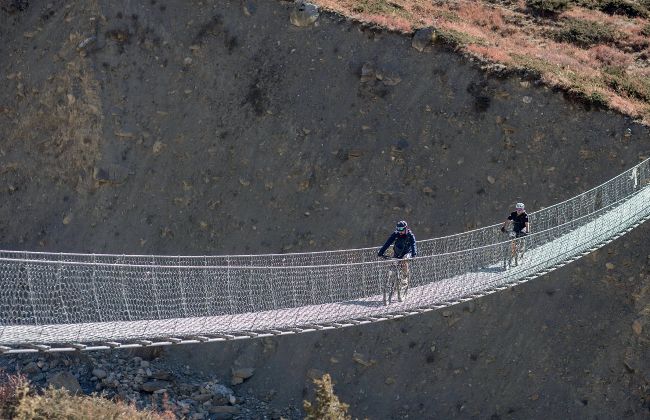
The Yak Attack race in Nepal is the highest mountain bike race in the world. Racers climb to the staggering height of 5,416m over 260km along the Annapurna Circuit. Or should I say, it was the highest mountain bike race in the world. It had been on my bucket list for years, so when it was announced that 2023 would be the final Yak Attack it was time to give it a go. Run as a not-for-profit race, it had seen a decline in participants and an increase in running costs, meaning the race was no longer viable.
It was now or never. A quick discussion ensued with my husband, Hugo, who would be racing with me. He confirmed his attendance with an “Aye, why not!”, and so it was agreed we would head to Nepal. More at home on the local muddy trails in Fort William than on massive cross-country rides, I would have to prepare for a total change of scene.
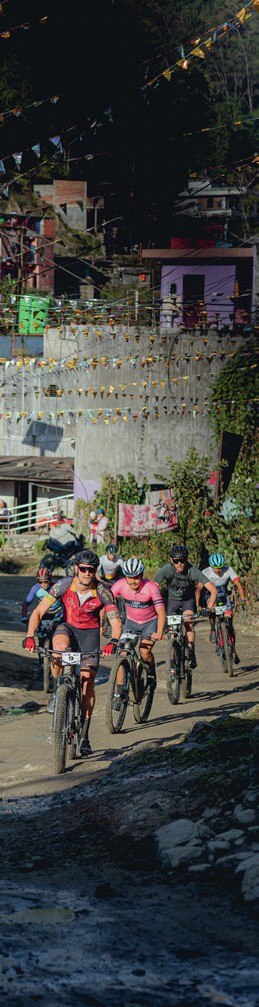
During the 15 years of the Yak Attack, the mountain biking scene in Nepal has transformed. When the race started, there were only two small bike shops in Kathmandu. Now there are over 20, and they stock some of the biggest mountain biking brands. Gone are the days of only a handful of Nepali cross-country riders – local races can now have up to 100 competitors. There is also an increase in enduro and downhill riders and trails being built. This year a new pump track opened in Kathmandu. The mountain biking scene here is growing and expanding. But mountain biking is a very expensive sport in Nepal – the country’s top mountain bike athletes are unable to get sponsorship and rely on the Yak Attack Foundation, which supports them in racing and supplies muchneeded bikes and kit.
Credit: Puspa Maharjan
Getting ready to attack the Yak
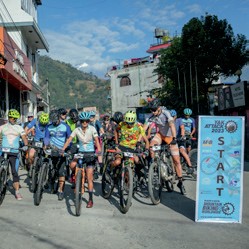
This last running of the race had 26 entrants: 14 international racers from all over the world and 12 Nepali racers ranging in age from early 20s to over 60s. For the first year ever, six of these racers were female.
After a long bus journey on some dubious jeep tracks, we arrived in Besisahar. I got my first glimpse of the Himalayan mountains I’d be spending the next ten days racing around. They did not disappoint, snow-covered and magnificent with all their jagged edges. At the start line the following morning, it was already 30°C. Stage 1, a big loop starting and ending in the village, took us on a climb up to 1,032m on a rocky, gravelly jeep track. We passed small houses built on the hillside and a beautiful thick jungle filled with wildlife. Villagers stood outside their homes shouting encouragement, excited to see all the racers. Such support for mountain bikers here was something I had never come across before.