Expressive techniques
Carole Robson shows you some techniques you can use to enliven your watercolour landscape paintings
The use of expressive techniques in watercolour is not a new phenomenon. JMW Turner (1775–1881) made dramatic use of them. He was ahead of his time and shocked his audiences by flicking, dabbing and using his fingers to apply and move paint around, as well as scratching into the surface of his paintings. Turner did not have access to some of the materials used for the following techniques, but I’m sure that he would have approved.
Carole Robson studied at Central St Martins School of Art. She worked as a book illustrator and received a variety of commissions. She now works and tutors from her studio in Kent and exhibits in London and the south east of England.
www.carolerobson.com
This extract is adapted from Painting Expressive Landscapes by Carole Robson, published by Search Press, ISBN: 9781782215530, £14.99 rrp, to be published in April.www.searchpress.com. Readers can save £2 and enjoy free p&p by ordering from our online bookshop. See pages 6 and 68 for details.
Plastic food wrap for texture
Plastic food wrap can be crumpled to mimic the complex patterns of rocks or other textures. Laid over wet paint, interesting shapes will be formed once dry. Two possible reasons for this technique not working are: the wash dried out before the plastic wrap was added, or the wrap was removed before the wash was completely dry.
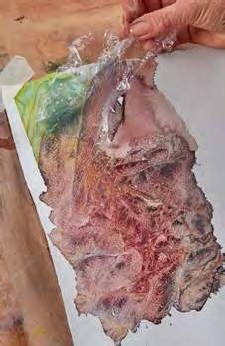
Scrunch the food wrap and open it out, then lay it into a wet wash. Once the paint has dried, the food wrap can be peeled away, revealing interesting shapes left on the surface
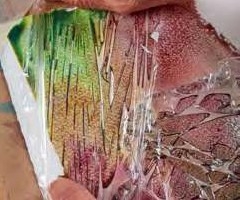
Stretching the food wrap into thin folds creates a grass-like texture in a meadow wash. With a different colour scheme, this can look effective in a calm sky or sea