Photo Answers
Confused about colour depth? Disconcerted over DPI? Send your technique and camera questions to digitalcamera@futurenet.com
Andrew James
Andrew is a highly experienced writer and photographer – if you have a problem, he is here to help.
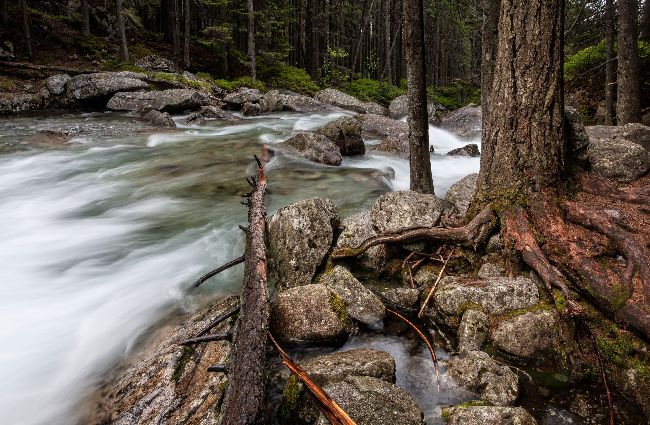
Shooting at f/16 rather than at the narrowest aperture of your lens is usually the best balance of depth of field and image quality.
Andrew James
Stacking it
Q
Why would I need to focus-stack a wide-angle image, when my lens goes up to f/22 and gives me a lot of depth of field?
Reece Hopper
A
You are correct that f/22 – often the narrowest aperture on a wide-angle lens – will give you lots of depth of field, which is defined as the area within the image that is acceptably sharp. The trouble is that there are potential quality issues that come into play at f/22, which reduce the quality of the image and therefore adversely affect its sharpness. For this reason, f/11 or f/16 are often considered better apertures to choose and use when you want lots of through-sharpness within your image.
But there will be times when even at f/16 you can’t get that extreme sharpness from foreground to distance. This is when focus-stacking – taking a series of shots focused at two, three or even four different points within the frame at a constant aperture, which are then merged together in Photoshop – can give you excellent results. Of course, this needs extra effort at both the shooting and processing stages. Also, you can run into some blending issues if there are moving elements within your composition – such as vegetation swaying in the wind. That said, done right, it can result in ultra-sharp images from front to back – so it is worth experimenting with, alongside shooting conventionally.