TECHNIQUES
SNAP THE STREETS
Get into position, observe and press the shutter – street photography sounds simple, but there’s an art to capturing images with alasting impression
Words by Kim Bunermann
Pictured
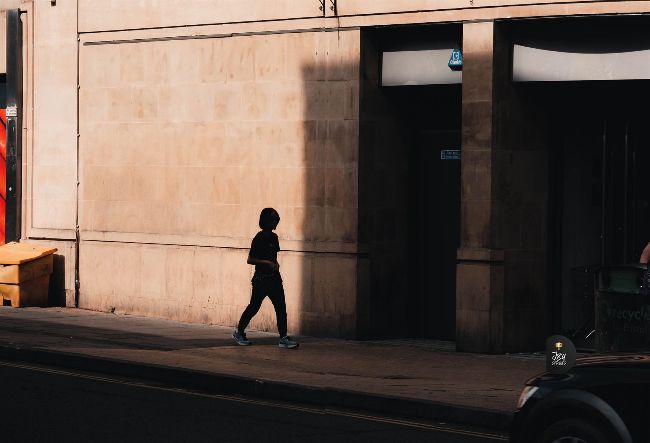
Light exercise Natural lighting plays abig role in street photography. Ordinary street corners can be transformed by the changing light
All images by Jamie Canning
French photographer Robert Doisneau famously said, “The marvels of daily life are exciting; no movie director can arrange the unexpected that you find in the street.” And nowhere is this more true than in street photography – the streets bring people together who may not otherwise have crossed paths. Indeed, the most thrilling aspect of street photography lies in the unexpected combinations of people and their actions that come together fortuitously for the perfect shot.
Observing the way in which people interact is an important element of street photography, allowing you to capture people off-guard while going about their business. Walking the streets with a camera in hand and watching what’s happening around you is not just the best way to discover the city but also to practice your photographic skills. However, it is important to remain discreet when doing so.
Urban areas offer plenty of opportunities to capture images that celebrate everyday life. However, certain times of the day offer a greater potential for capturing catching situations, such as the end of working hours when people are heading to public transport. Events such as exhibitions, fashion shows and conventions also offer the opportunity to frame unique characters amid the hustle and bustle of the city.
Over the next few pages, we will cover everything you need to know about street photography. With pro advice from photographer Jamie Canning, we’ll cover everything from choosing the right gear to using your camera’s automatic modes to best effect. We’ll also look at remaining discreet when capturing authentic street scenes and respecting people’s privacy.
Jamie Canning
Jamie Canning is a street photographer from south Wales. His role as a public servant in the UK has finely tuned Jamie’s ability to observe and understand people in various situations. This experience translates seamlessly into his street photography, allowing him to capture genuine and diverse moments that reflect the rich tapestry of human life.
@j84_streets
Pictured
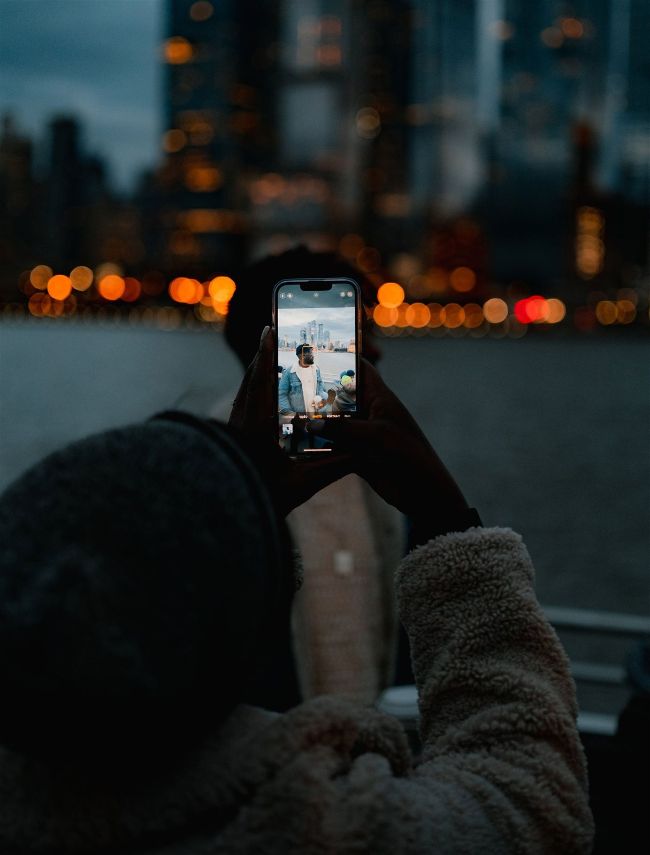
Make use of modes It doesn’t matter which brand of smartphone you use to capture ascene. Take alook at the modes provided to introduce depth of field and more
SHOOT SMART
Using your smartphone is an excellent idea, particularly in situations where you don’t have access to your mirrorless or DSLR camera, or in places where cameras are prohibited. Smartphones have become so advanced that some photographers now specialise in this type of photography. You can also use clip-on accessories like alternative wideangle lenses or macro lenses to make the most out of your phone’s camera. Don’t forget to adjust the camera settings to highquality jpeg.
Choose the right lens
Find the right lens that helps you to act fast and capture the perfect moment
The lens you choose for street photography should be easy to handle, flexible and have accurate focus so you avoid ending up with blurry subjects. Manual lenses are popular as they don’t rely on the camera’s autofocus – instead, they achieve accurate focus through focus distance scales, depthof-field markings and aperture. Although handling manual focus lenses isn’t easy at first, with practice, you will be able to use them to their full potential.
A 35mm or 50mm focal length is often the best choice for the streets, with the 35mm being a classic format due to its natural perspective. “I only shoot with prime lenses,” says Jamie. “I tend to gravitate towards 35mm or 50mm lenses as they provide a broader field of view, allowing me to encompass more of the scene and capture larger subjects with clarity. These lenses offer wider apertures, sharper images and better low light performance compared with zoom lenses.”
Choosing a prime lens instead of a zoom lens is a smart decision, as it forces you to think with your feet to find the best composition. “A prime lens means you have to move, which encourages you to learn about composition,” Jamie adds. “They also require you to be more confident as you’re a lot closer to the action than you would be with an 85mm or a zoom lens.”