SHOOT LIKE A PRO
ALL ACCESS
Peter Fenech meets Isobel Greenhalgh to discuss accessibility in photography and how small changes can make abig difference
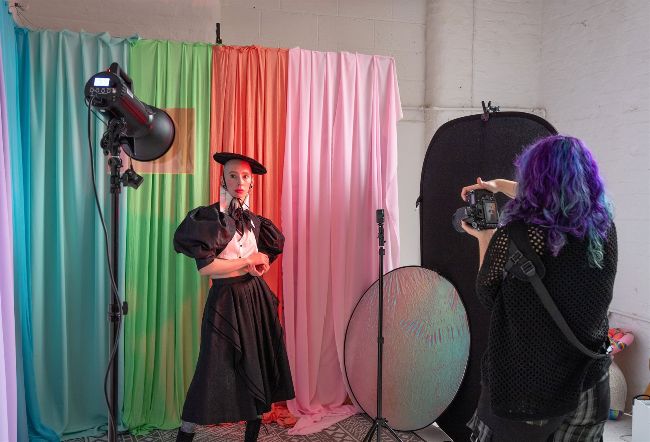
All main images © Isobel Greenhalgh
Isobel Greenhalgh
Manchester-based Isobel Greenhalgh is a commercial and portrait photographer, image retoucher and creative who specialises in photoshoots that are accessible to clients with additional needs. Her colourful style is contemporary and heavily inspired by modern concept art. Isobel strives to raise awareness of accessibility issues in photography and as a working professional who is dealing with chronic illness herself, she is well-positioned to understand the community she serves. isobelgcreative.co.uk @isobelgcreative
The term ‘anything for a photograph’ is used quite a lot. Many professional photographers will find themselves walking several miles to remote locations, lying on the floor of a studio or contorting into odd positions to get the perfect shot for their clients, resulting in a few aches and pains in the following days.
However, few of us put much thought into what it must be like to work with a disability in this industry and the additional challenges this involves.
Furthermore, in our quest for the perfect image, it is easy to forget the toll this may take on our subjects themselves and the discomfort this could inflict if they too have physical or mental health conditions.
Photographer Isobel Greenhalgh is on a mission to spread the word about how disability can impact the photography industry and to raise awareness of how we can make things better for people working on both sides of the camera. I meet Isobel at a studio space on the east side of Manchester, housed in a marvellously atmospheric old textiles facility. Isobel jokes about the lift being broken and as we climb several flights of stairs, I already see how this could present a problem for clients less able-bodied. I start by asking her about the common accessibility issues.
“Unfortunately, regulations in this country favour buildings over people,” Isobel says. “Many
buildings cannot legally have required accessibility alterations made to them. This is a huge barrier. It makes finding locations that are suitable for everyone almost impossible. That’s either because they don’t exist or because those that do are woefully expensive,” she adds.