SHOOT WITH ONE
Words by Kim Bunermann
Pictured
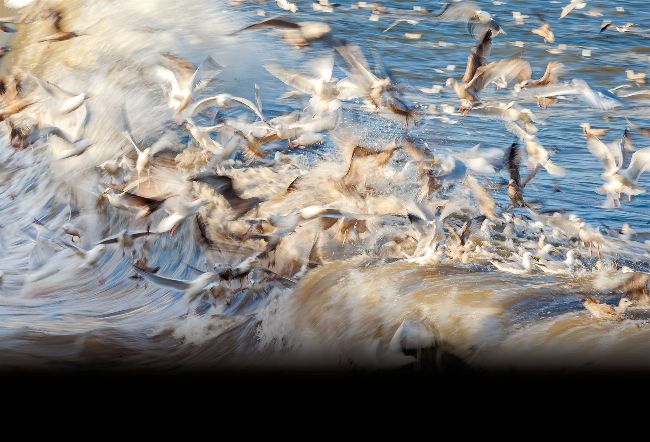
Gulls in the wind
An artistic view of seagulls, conveying a dynamic motion blur caused by using a slower shutter speed
© Mark Deans
Find the ideal lens for you and discover pro tricks to exploit its versatility
If you ask professional photographers what is more important, the quality of the camera body or the quality of the lens, the majority will say the lens. In a market flooded with options, it can be challenging to select the perfect optic. Of course, all this new lens technology comes with a higher price tag, making it even more important to avoid being swayed by marketing and to invest in optics that correspond with your photographic style and objectives.
While you can use multiple lenses for your work, constantly changing lenses can be annoying in the long run, not to mention the additional expense involved. Therefore, a good lens should be versatile, offering the ability to use it in various ways and making it a valuable long-term investment. These workhorse lenses will provide an efficient return on your money by meeting most job requirements in a single purchase. Here, the ideal focal length range for such a lens will depend on your typical subjects and should be determined based on your specific needs.
The choice can often be narrowed down to prime or zoom lenses, with some photographers preferring primes for their superior image quality and others choosing the flexibility of zoom optics. While prime lenses have a reputation for creating sharper images, technological advancements have narrowed this gap. Prime lenses are often cheaper, lighter and have higher maximum aperture settings, making them suitable for low-light situations and achieving a shallow depth of field.
Overall, it depends on the subject you are shooting and on the way you prefer to work. Over the next few pages, we will delve into the different types of lenses, from standard ones to professional gear, looking at their focal lengths and how they affect your images. Featuring insights from three professional photographers, we hope to offer you comprehensive guidance to help ensure that your next lens purchase serves you effectively for a very long time.

Pictured
Distinctive perspective
By changing the angle, Oksana Zarovna made use of an unusual background to create aportrait with aunique impact
© Oksana Zarovna
Match your photo needs
Take this quiz to find the perfect focal length range for your subjects
Make it last
Discover tools that will help you get the most out of using ‘just’ one optic
When purchasing a lens, after the focal length, the focus is on the aperture possibilities. Throughout the history of photography, lenses with large apertures, such as f/1.4, have been popular and often command higher prices compared with their f/4 or f/8 counterparts.