Game on
ELLA BRAIDWOOD SPEAKS TO THE LEZ/BI LEADING LIGHTS IN WOMEN’S FOOTBALL, FROM THE PITCH TO THE BOARD ROOM
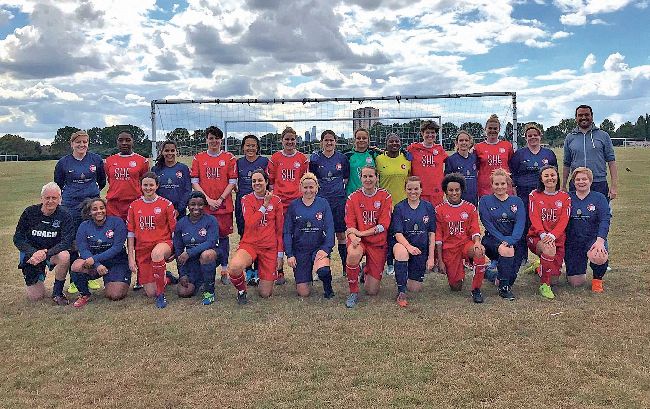
Ella’s team, Tower Hamlets WFC
PHOTOS TOWER HAMLETS WFC, SCOTTISH FA, JMPUK
In many ways, this summer’s Women’s World Cup – one of jubilation, broken records and heartbreak – was completely magical.
It did, certainly, mark a seismic shift of progress for the women’s game, capturing hearts across the world and changing mindsets, previously dismissive of the sport, by showcasing the sheer quality of the game. In the UK, Scotland played in their inaugural World Cup finals – making them the first national team to compete in the football tournament since 1998 – while England’s Lionesses crashed out in a heart-wrenching semi-final defeat against subsequent champions, the USA.
While neither British team left France with a medal, there was plenty to be proud of back home. On top of the 53,000 fans that crammed into Lyon’s stadium to watch England take on USA, a peak of 11.7 million viewers watched the match on the BBC. In doing so, it smashed the record for UK television’s biggest audience for a women’s match and, incredibly, remains the most-viewed programme of 2019 so far. So, what has been the impact of the Women’s World Cup? Has the success of the flagship tournament been felt across the professional and amateur leagues in the UK?