PHILIPPINES DIVER
CORON IN COMFORT
You can get your fill of big World War Two wrecks from the Philippines getaway island of Sangat, says BRANDI MUELLER, reporting coffee in hand from her go-to hammock
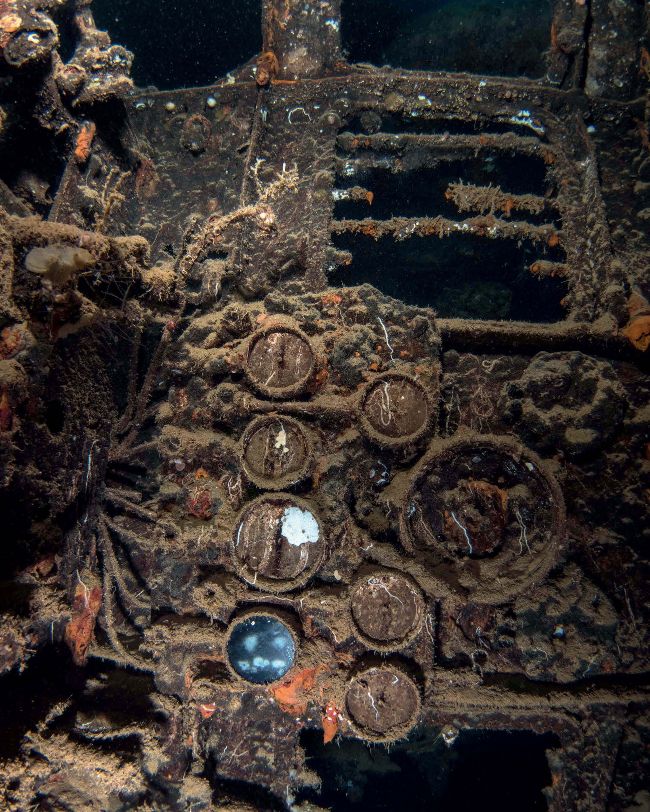
Pictured: Engine-room gauges on Brandi’s favourite Coron wreck, the Akitsushima.
AT 5.50AM ON 24 SEPTEMBER, 1944, 96 Grumman F6F Hellcat fighters and 24 Curtis SB2C Helldiver bombers lifted off from aircraft-carriers for what would be the longest-range air attack launched to date.
Their destination was Coron Bay, 340 miles away. Twelve ships from a Japanese supply fleet were thought to have found an unknown and safe anchorage there.
The ships had come from Manila Bay, some 170 nautical miles away, on 23 September. Manila Bay was under attack and at least 15 ships had been sunk by US air-strikes since 21 September.
Hoping to save the rest, the Japanese had been moving them to other locations thought to be out of range of US naval aircraft and land-based bombers. They thought the ships in Coron Bay had arrived secretly - they were wrong.
The US Third Fleet was commanded by Admiral William F “Bull” Halsey aboard the battleship USS New Jersey.
He designed a mission that was approved by Task Force 38’s commander Vice-Admiral Mac A Mitscher on the USS Lexington aircraft-carrier.
How the Americans discovered the fleet in Coron Bay is unknown but whether spotted by aerial photo reconnaissance or intercepted Japanese radio transmissions, the ships were subject to a surprise air attack.
The plan relied on a quick strike. At that distance, the crews knew they had only minutes to strike before they would have to head back to their carriers.
The planes arrived at 9am to find the 12 ships in the bay. Within minutes they were heading back, leaving every ship sinking or burning behind them. Every plane returned safely and only one vessel, the Kamoi, was reported to have escaped.