THE DEFIANT ONE
OF LATE , JAMIE LEE CURTIS HAS RADICALLY SHAKEN UP HER CAREER. AND WITH A POWERFUL PERFORMANCE IN THE LAST SHOWGIRL, SHE TELLS US WHY SHE’S DONE WITH COMPROMISING
WORDS HAYLEY CAMPBELL
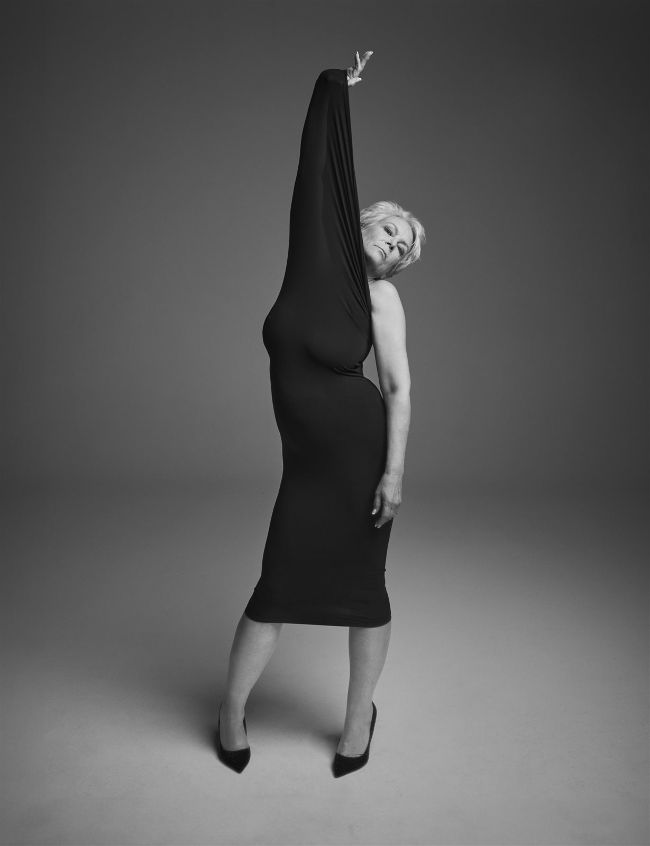
Jamie Lee Curtis, photographed exclusively for Empire in Los Angeles on 7 December 2024.
ROBERT ASCROFT
JAMIE LEE CURTIS
DOES NOT
LIKE A MOOD BOARD.
THIS IS WHAT
EMPIRE
DISCOVERED ON OUR PHOTOSHOOT: TH AT TRYING TO BEND JAMIE LEE CURTIS INTO A PREDETERMINED PLAN IS THE QUICKEST WAY TO MAKE HER GRUMPY.
“I was so grumpy!” she says a couple of days later over Zoom, laughing. She’d seen our suggested looks and she hated the poses, hated the clothes. She wanted to wear a Loewe blouse she saw Dan Levy wear on a red carpet, with a collar swept up like it was caught in the wind —the chicest thing she had ever seen —but most of all, she just wanted to be herself. Obviously, Empire went along with it —we’re not monsters. “As soon as we started shooting, I was the happiest person because I was free,” she says. “I was on fire! I was shaking because I felt that I had existed, and that I wasn’t trying to pretend to be anybody.”
This is a new era for Curtis. Having broken out in 1978 with John Carpenter’s Halloween, her career has spanned genres: she went from scream queen to comedy —earning BAFTA nominations for Trading Places and AFish Called Wanda, winning the former —before dangling below a helicopter in James Cameron’s explosive True Lies. But now she is finally getting to do what she always wanted to do —playing characters that are varied, complex and real. In The Last Showgirl she plays Annette, a veteran Las Vegas cocktail waitress and best friend to Pamela Anderson’s Shelly, battling a gambling addiction and diminishing hours. In The Bear she stressed everyone out as Donna Berzatto, Carmy’s emotionally volatile mother. And then there was IRS inspector Deirdre Beaubeirdre, in Everything Everywhere All At Once, which won her an Academy Award.
Clearly, magic happens if you let Jamie Lee Curtis do what she wants to do. “I blew up the mood boards because I’m not who you think I am,” she says, defiant. “That’s probably the biggest crux of it: I’m not who you think I am. Let me show you. I am way more than you think I am.”
There’s been a change recently in the roles you’re taking on — they’re weirder, darker, deeper. When did that happen?
Halloween [1978] to me is my first character work, and then my last character work for a long time, until I reclaimed it. After The Fog, I had TV shows, my personality came out. From then on, the most detailed character work was, “What size jeans do you wear?” They just sort of ran Jamie through different spin cycles. That changed, really, with Laurie Strode [in the David Gordon Green-directed Halloween] in 2018 because that woman was specific and curated. It was about something bigger than just ‘Laurie Strode was now 40 years older’. A lot of shit had happened to her. So I think that freed me, because right after that came Knives Out. Going back to that character work was important to me —hiding myself, and letting the character actually do the work.