CAUGHT IN ATRAP
PRISCILLA PAINTS A PORTRAIT OF A LONELY YOUNG WOMAN IN AN ABUSIVE RELATIONSHIP. DIRECTOR SOFIA COPPOLA TAKES US BEHIND THE CURTAIN
WORDS CHRISTINA NEWLAND
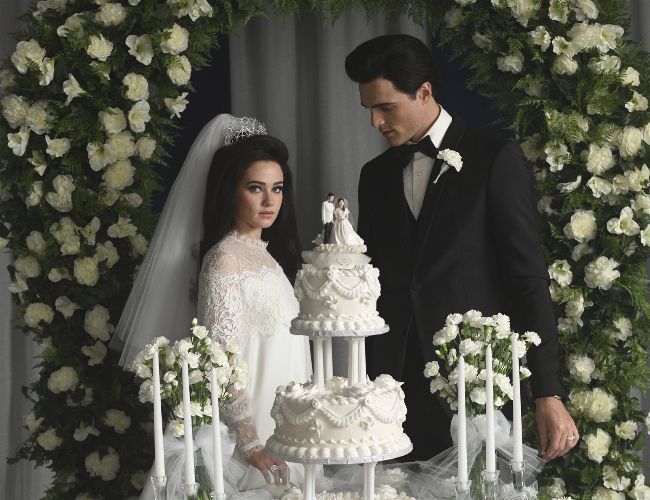
Burning love — Cailee Spaeny as Priscilla and Jacob Elordi as Elvis
Priscilla Beaulieu
walks down her high-school hallway. In languid slow-motion, she’s soundtracked to Tommy James & the Shondells’ sinuous, seductively repetitive ‘Crimson And Clover’. This young girl is not yet the famous wife known as Priscilla Presley, signified by the lacquered black beehive and ’60s cat eyeliner: she has lighter brown hair, swept to one side, and she looks her age, a whole 15, for one thing. But she has met — and kissed — Elvis Aaron Presley. Ergo the besotted smile and snagged-a-dreamboat stare.
Sofia Coppola knows a thing or two about the interior daydreams and external trappings of girlhood. From her debut feature The Virgin Suicides through to Lost In Translation and Marie Antoinette, her films are often about teenage girls — or teen girls trapped in women’s bodies — who spend time in isolation, consumed by loneliness and fantasy.
“When I first read her story, I thought it would be juicy and interesting,” Coppola tells Empire of reading Priscilla Presley’s 1985 memoir Elvis & Me. “She was such a glamorous figure. But it surprised me how deep and touching it was. I didn’t think I could relate to it, but she really revealed her emotional experiences and I was surprised to learn it has everything in it that a girl goes through, just in a heightened way. She talked about her first kiss, the first time in a boy’s bedroom, or becoming a mother in ways that were universal.”
Priscilla Presley’s story was one of girlhood fantasy which bled into something far more toxic — a relationship with a famous man a decade her senior who whisked her from her parents into secluded luxury, and increasingly controlled her every move. Yet it also details the complex pleasures and appeal of the situation. “It has so much to do with romantic ideas and the fairy tale that turns into something else,” says Coppola. “I wanted to get her point of view of how it was romantic. Until it wasn’t.”