Está viendo la página Spain versión del sitio.
Le gustaría cambiar a su sitio local?
Última edición


Free Sample Issue
Pruebe una muestra GRATIS de Wildlife Australia
Pruebe una muestra GRATIS de

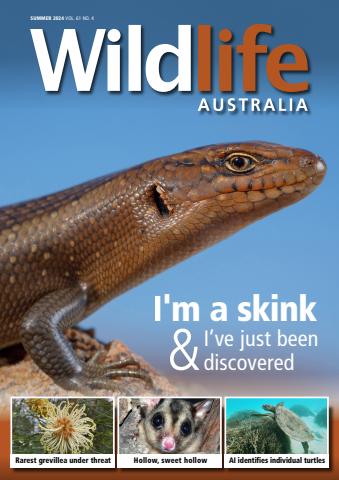
Wildlife Australia Magazine Summer 2024 Edición anterior

English
5 Reseñas   •  English   •   Leisure Interest (Wildlife)
Only €4,99
THREE-and-a-half decades ago, Douglas Adams wrote the hilarious Hitchhikers Guide to the Galaxy series of novels and radio plays. Then he realised his premise, that aliens were about to destroy planet Earth (to make way for a hyperspace bypass) had a not-so-funny parallel.
Humans were constantly destroying crucial habitat—for similar bypass roads—tipping animal and plant species towards extinction.
Adams sounded the alarm. He wrote a book and a 1989 radio series called Last Chance to See, with zoologist Mark Carwardine, and they scoured the world to see just-about-extinct animals. Although the episodes were light hearted, they left viewers with pangs of uneasiness.
Adams died suddenly of heart failure at age 49, but his broadcaster friend Stephen Fry joined Mark Carwardine to follow up with BBC Television’s documentary series of Last Chance to See in 2009.
Adams believed comedy and irony were effective methods of helping others to comprehend a crisis. He realised our endangered species problem was no laughing matter: “For millions of years, on average, one species became extinct every century... We are now heaving more than a thousand different species of animals and plants off the planet every year.”
Since Douglas Adams said that, flora and fauna extinctions have accelerated to ‘worse’—much worse.
Proof of that is in this edition of Wildlife Australia. Read the endangered species reports from the Biodiversity Council of Australia, the IUCN Red List, the Australian Conservation Foundation and, of course, Wildlife Queensland.
However, the heartening thing today, compared with Douglas Adams’ time, is that so many more Australians are organised and mobilised to challenge those problems.
In Australia’s unique case, environmental science melding with First Nations’ habitat management techniques is both a revelation and a revolution.
Take heed—and take heart. Or, as Douglas Adams would recommend: Don’t Panic.
read more read less
Wildlife Australia Preview Pages Wildlife Australia Preview Pages Wildlife Australia Preview Pages Wildlife Australia Preview Pages Wildlife Australia Preview Pages Wildlife Australia Preview Pages Wildlife Australia Preview Pages Wildlife Australia Preview Pages

Wildlife Australia

Summer 2024 THREE-and-a-half decades ago, Douglas Adams wrote the hilarious Hitchhikers Guide to the Galaxy series of novels and radio plays. Then he realised his premise, that aliens were about to destroy planet Earth (to make way for a hyperspace bypass) had a not-so-funny parallel. Humans were constantly destroying crucial habitat—for similar bypass roads—tipping animal and plant species towards extinction. Adams sounded the alarm. He wrote a book and a 1989 radio series called Last Chance to See, with zoologist Mark Carwardine, and they scoured the world to see just-about-extinct animals. Although the episodes were light hearted, they left viewers with pangs of uneasiness. Adams died suddenly of heart failure at age 49, but his broadcaster friend Stephen Fry joined Mark Carwardine to follow up with BBC Television’s documentary series of Last Chance to See in 2009. Adams believed comedy and irony were effective methods of helping others to comprehend a crisis. He realised our endangered species problem was no laughing matter: “For millions of years, on average, one species became extinct every century... We are now heaving more than a thousand different species of animals and plants off the planet every year.” Since Douglas Adams said that, flora and fauna extinctions have accelerated to ‘worse’—much worse. Proof of that is in this edition of Wildlife Australia. Read the endangered species reports from the Biodiversity Council of Australia, the IUCN Red List, the Australian Conservation Foundation and, of course, Wildlife Queensland. However, the heartening thing today, compared with Douglas Adams’ time, is that so many more Australians are organised and mobilised to challenge those problems. In Australia’s unique case, environmental science melding with First Nations’ habitat management techniques is both a revelation and a revolution. Take heed—and take heart. Or, as Douglas Adams would recommend: Don’t Panic.


SELECCIONAR FORMATO:
Acceso instantáneo

Ofertas digitales disponibles:

Ejemplar digital único Summer 2024
 
4,99 / issue
Este número y otros números atrasados no se incluyen en un Wildlife Australia suscripción. Las suscripciones incluyen el último número de la revista y los nuevos números publicados durante el periodo de suscripción. €2,00 por número en el Cyber Week 2025 Big Annual Subscriptions Sale - General Interest offer. . Si desea suscribirse, consulte nuestro Opciones de suscripción
Los ahorros se calculan sobre la compra comparable de números sueltos durante un periodo de suscripción anualizado y pueden variar respecto a los importes anunciados. Los cálculos son meramente ilustrativos. Las suscripciones digitales incluyen el último número y todos los números regulares publicados durante su suscripción, a menos que se indique lo contrario. El periodo elegido se renovará automáticamente a menos que se cancele en el área Mi cuenta hasta 24 horas antes del final de la suscripción actual.

Wildlife Australia issue Summer 2024

Wildlife Australia  |  Summer 2024  


THREE-and-a-half decades ago, Douglas Adams wrote the hilarious Hitchhikers Guide to the Galaxy series of novels and radio plays. Then he realised his premise, that aliens were about to destroy planet Earth (to make way for a hyperspace bypass) had a not-so-funny parallel.
Humans were constantly destroying crucial habitat—for similar bypass roads—tipping animal and plant species towards extinction.
Adams sounded the alarm. He wrote a book and a 1989 radio series called Last Chance to See, with zoologist Mark Carwardine, and they scoured the world to see just-about-extinct animals. Although the episodes were light hearted, they left viewers with pangs of uneasiness.
Adams died suddenly of heart failure at age 49, but his broadcaster friend Stephen Fry joined Mark Carwardine to follow up with BBC Television’s documentary series of Last Chance to See in 2009.
Adams believed comedy and irony were effective methods of helping others to comprehend a crisis. He realised our endangered species problem was no laughing matter: “For millions of years, on average, one species became extinct every century... We are now heaving more than a thousand different species of animals and plants off the planet every year.”
Since Douglas Adams said that, flora and fauna extinctions have accelerated to ‘worse’—much worse.
Proof of that is in this edition of Wildlife Australia. Read the endangered species reports from the Biodiversity Council of Australia, the IUCN Red List, the Australian Conservation Foundation and, of course, Wildlife Queensland.
However, the heartening thing today, compared with Douglas Adams’ time, is that so many more Australians are organised and mobilised to challenge those problems.
In Australia’s unique case, environmental science melding with First Nations’ habitat management techniques is both a revelation and a revolution.
Take heed—and take heart. Or, as Douglas Adams would recommend: Don’t Panic.
Seguir leyendo leer menos
Embrace a wilder life – download Wildlife Australia, the country’s leading nature magazine. Fifty pages of insightful and thought-provoking articles and stunning photographs.
Celebration: Celebrate the essence of Australia – its vast wild landscapes and distinctive wildlife, most found nowhere else in the world
Insights: The articles are written by leading researchers and those whose care for nature comes from deep insights. You won’t find this information by Googling.
Beauty: Immerse yourself in the allure and charm of wildlife with photos by some of Australia’s leading nature photographers.
Understanding: Wildlife Australia is a hub for people who value their relationship with nature and know it is enriched by knowledge. The nature experience can be powerful, but often requires interpretation.
Inspiration: Be inspired by what people are doing to understand and protect nature.
Conservation: Wildlife Australia is a not-for-profit magazine and all profits go to protect nature.

A subscription to Wildlife Australia won't cure arthritis or tonsillitis, but is great for two modern ailments: dislocation from nature and existential malaise. Download the app and see.

omo abonado recibirá las siguientes ventajas:


•  Un descuento sobre el PVP de su revista
•  Las nuevas ediciones se envían a tu dispositivo el día de su lanzamiento
•  Nunca te perderás un número
•  Estás protegido de las subidas de precios que puedan producirse más adelante en el año

Recibirás 4 problemas durante un año Wildlife Australia suscripción a la revista.

Nota: Las ediciones digitales no incluyen los artículos de portada ni los suplementos que encontraría en los ejemplares impresos.

Su compra aquí en Pocketmags.com puede leerse en cualquiera de las siguientes plataformas.


Puedes leer aquí en el sitio web o descargar la aplicación para tu plataforma, sólo recuerda iniciar sesión con tu nombre de usuario y contraseña de Pocketmags.

Apple Pocketmags Online Pocketmags Google Pocketmags
La aplicación Pocketmags funciona en todos los dispositivos iPad y iPhone con iOS 13.0 o superior, Android 8.0 o superior y Fire Tablet (Gen 3) o superior. Nuestro lector web funciona con cualquier navegador compatible con HTML5, para PC y Mac recomendamos Chrome o Firefox.

Para iOS recomendamos cualquier dispositivo que pueda ejecutar el último iOS para un mejor rendimiento y estabilidad. Los modelos anteriores con especificaciones de procesador y RAM inferiores pueden experimentar una renderización de páginas más lenta y fallos ocasionales de la aplicación que están fuera de nuestro control.
5,0
/5
Basado en 5 Opiniones de los clientes
5
5
4
0
3
0
2
0
1
0
Ver comentarios

Artículos de este número


A continuación encontrará una selección de artículos en Wildlife Australia Summer 2024.

Free Sample Issue
Pruebe una muestra GRATIS de Wildlife Australia
Chat
X
Soporte Pocketmags