You are currently viewing the Australia version of the site.
Would you like to switch to your local site?
Latest Issue


Free Sample Issue
Try a FREE sample of Wildlife Australia
Try a FREE sample

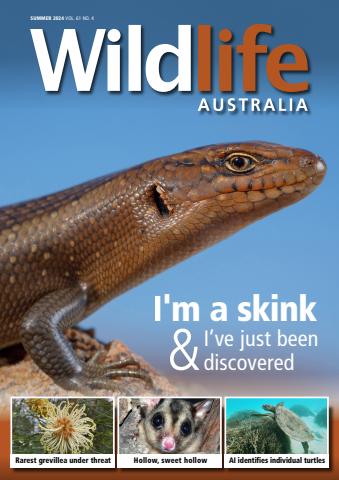
Wildlife Australia Magazine Summer 2024 Back Issue

English
5 Reviews   •  English   •   Leisure Interest (Wildlife)
Only $5.99
THREE-and-a-half decades ago, Douglas Adams wrote the hilarious Hitchhikers Guide to the Galaxy series of novels and radio plays. Then he realised his premise, that aliens were about to destroy planet Earth (to make way for a hyperspace bypass) had a not-so-funny parallel.
Humans were constantly destroying crucial habitat—for similar bypass roads—tipping animal and plant species towards extinction.
Adams sounded the alarm. He wrote a book and a 1989 radio series called Last Chance to See, with zoologist Mark Carwardine, and they scoured the world to see just-about-extinct animals. Although the episodes were light hearted, they left viewers with pangs of uneasiness.
Adams died suddenly of heart failure at age 49, but his broadcaster friend Stephen Fry joined Mark Carwardine to follow up with BBC Television’s documentary series of Last Chance to See in 2009.
Adams believed comedy and irony were effective methods of helping others to comprehend a crisis. He realised our endangered species problem was no laughing matter: “For millions of years, on average, one species became extinct every century... We are now heaving more than a thousand different species of animals and plants off the planet every year.”
Since Douglas Adams said that, flora and fauna extinctions have accelerated to ‘worse’—much worse.
Proof of that is in this edition of Wildlife Australia. Read the endangered species reports from the Biodiversity Council of Australia, the IUCN Red List, the Australian Conservation Foundation and, of course, Wildlife Queensland.
However, the heartening thing today, compared with Douglas Adams’ time, is that so many more Australians are organised and mobilised to challenge those problems.
In Australia’s unique case, environmental science melding with First Nations’ habitat management techniques is both a revelation and a revolution.
Take heed—and take heart. Or, as Douglas Adams would recommend: Don’t Panic.
read more read less
Wildlife Australia Preview Pages Wildlife Australia Preview Pages Wildlife Australia Preview Pages Wildlife Australia Preview Pages Wildlife Australia Preview Pages Wildlife Australia Preview Pages Wildlife Australia Preview Pages Wildlife Australia Preview Pages

Wildlife Australia

Summer 2024 THREE-and-a-half decades ago, Douglas Adams wrote the hilarious Hitchhikers Guide to the Galaxy series of novels and radio plays. Then he realised his premise, that aliens were about to destroy planet Earth (to make way for a hyperspace bypass) had a not-so-funny parallel. Humans were constantly destroying crucial habitat—for similar bypass roads—tipping animal and plant species towards extinction. Adams sounded the alarm. He wrote a book and a 1989 radio series called Last Chance to See, with zoologist Mark Carwardine, and they scoured the world to see just-about-extinct animals. Although the episodes were light hearted, they left viewers with pangs of uneasiness. Adams died suddenly of heart failure at age 49, but his broadcaster friend Stephen Fry joined Mark Carwardine to follow up with BBC Television’s documentary series of Last Chance to See in 2009. Adams believed comedy and irony were effective methods of helping others to comprehend a crisis. He realised our endangered species problem was no laughing matter: “For millions of years, on average, one species became extinct every century... We are now heaving more than a thousand different species of animals and plants off the planet every year.” Since Douglas Adams said that, flora and fauna extinctions have accelerated to ‘worse’—much worse. Proof of that is in this edition of Wildlife Australia. Read the endangered species reports from the Biodiversity Council of Australia, the IUCN Red List, the Australian Conservation Foundation and, of course, Wildlife Queensland. However, the heartening thing today, compared with Douglas Adams’ time, is that so many more Australians are organised and mobilised to challenge those problems. In Australia’s unique case, environmental science melding with First Nations’ habitat management techniques is both a revelation and a revolution. Take heed—and take heart. Or, as Douglas Adams would recommend: Don’t Panic.


SELECT FORMAT:
Instant Access

Available Digital Offers:

Single Digital Back Issue Summer 2024
 
$5.99 / issue
This issue and other back issues are not included in a Wildlife Australia subscription. Subscriptions include the latest regular issue and new issues released during your subscription and start from as little as $2.75 per issue in the Cyber Week 2025 Big Annual Subscriptions Sale - General Interest offer. . If you're looking to subscribe please check out our Subscription Options
Savings are calculated on the comparable purchase of single issues over an annualised subscription period and can vary from advertised amounts. Calculations are for illustration purposes only. Digital subscriptions include the latest issue and all regular issues released during your subscription unless otherwise stated. Your chosen term will automatically renew unless cancelled in the My Account area upto 24 hours before the end of the current subscription.

Wildlife Australia issue Summer 2024

Wildlife Australia  |  Summer 2024  


THREE-and-a-half decades ago, Douglas Adams wrote the hilarious Hitchhikers Guide to the Galaxy series of novels and radio plays. Then he realised his premise, that aliens were about to destroy planet Earth (to make way for a hyperspace bypass) had a not-so-funny parallel.
Humans were constantly destroying crucial habitat—for similar bypass roads—tipping animal and plant species towards extinction.
Adams sounded the alarm. He wrote a book and a 1989 radio series called Last Chance to See, with zoologist Mark Carwardine, and they scoured the world to see just-about-extinct animals. Although the episodes were light hearted, they left viewers with pangs of uneasiness.
Adams died suddenly of heart failure at age 49, but his broadcaster friend Stephen Fry joined Mark Carwardine to follow up with BBC Television’s documentary series of Last Chance to See in 2009.
Adams believed comedy and irony were effective methods of helping others to comprehend a crisis. He realised our endangered species problem was no laughing matter: “For millions of years, on average, one species became extinct every century... We are now heaving more than a thousand different species of animals and plants off the planet every year.”
Since Douglas Adams said that, flora and fauna extinctions have accelerated to ‘worse’—much worse.
Proof of that is in this edition of Wildlife Australia. Read the endangered species reports from the Biodiversity Council of Australia, the IUCN Red List, the Australian Conservation Foundation and, of course, Wildlife Queensland.
However, the heartening thing today, compared with Douglas Adams’ time, is that so many more Australians are organised and mobilised to challenge those problems.
In Australia’s unique case, environmental science melding with First Nations’ habitat management techniques is both a revelation and a revolution.
Take heed—and take heart. Or, as Douglas Adams would recommend: Don’t Panic.
read more read less
Embrace a wilder life – download Wildlife Australia, the country’s leading nature magazine. Fifty pages of insightful and thought-provoking articles and stunning photographs.
Celebration: Celebrate the essence of Australia – its vast wild landscapes and distinctive wildlife, most found nowhere else in the world
Insights: The articles are written by leading researchers and those whose care for nature comes from deep insights. You won’t find this information by Googling.
Beauty: Immerse yourself in the allure and charm of wildlife with photos by some of Australia’s leading nature photographers.
Understanding: Wildlife Australia is a hub for people who value their relationship with nature and know it is enriched by knowledge. The nature experience can be powerful, but often requires interpretation.
Inspiration: Be inspired by what people are doing to understand and protect nature.
Conservation: Wildlife Australia is a not-for-profit magazine and all profits go to protect nature.

A subscription to Wildlife Australia won't cure arthritis or tonsillitis, but is great for two modern ailments: dislocation from nature and existential malaise. Download the app and see.

As a subscriber you'll receive the following benefits:


•  A discount off the RRP of your magazine
•  New issues delivered to your device on the day of release
•  You'll never miss an issue
•  You’re protected from price rises that may happen later in the year

You'll receive 4 issues during a 1 year Wildlife Australia magazine subscription.

Note: Digital editions do not include the covermount items or supplements you would find with printed copies.

Your purchase here at Pocketmags.com can be read on any of the following platforms.


You can read here on the website or download the app for your platform, just remember to login with your Pocketmags username and password.

Apple Pocketmags Online Pocketmags Google Pocketmags
The Pocketmags app runs on all iPad and iPhone devices running iOS 13.0 or above, Android 8.0 or above and Fire Tablet (Gen 3) or above. Our web-reader works with any HTML5 compatible browser, for PC and Mac we recommend Chrome or Firefox.

For iOS we recommend any device which can run the latest iOS for better performance and stability. Earlier models with lower processor and RAM specifications may experience slower page rendering and occasional app crashes which are outside of our control.
5.0
/5
Based on 5 Customer Reviews
5
5
4
0
3
0
2
0
1
0
View Reviews

Articles in this issue


Below is a selection of articles in Wildlife Australia Summer 2024.

Free Sample Issue
Try a FREE sample of Wildlife Australia
Chat
X
Pocketmags Support