ESSENTIAL QUESTIONS, STRATEGIES & SOURCES
MEDIEVAL MASTERCLASS
‘It all looks so easy on television, doesn’t it?’ Writes Dr Nick Barratt. ‘Someone famous finds an ancestor with an established pedigree, and the next thing you know, they’re descended from Edward III and have blue blood running through their veins... It can be a bit off-putting but hang onto the thought that we’re all descended from people who lived that far back in time (even if they didn’t live in a palace or castle) – the challenging part is proving it!’
Dr Nick Barratt. ‘Someone
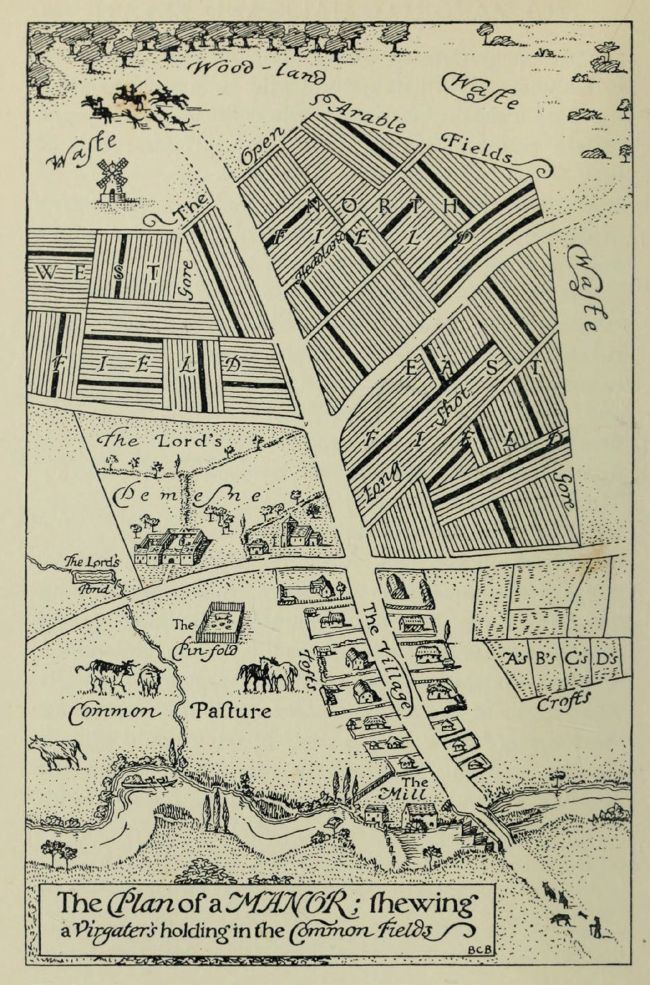
The manorial landscape
a plan showing the key elements of a ‘typical’ manor.
This masterclass will show you how to get started, explain how medieval English society worked, and introduce some of the key records you should search, as well as guide you through some of the difficulties associated with research prior to the standard sources we’re familiar with from the Victorian times onwards.
How do you get started?
As with any piece of research, you will need to start with the known information and work backwards, gathering clues and corroborating information from as many sources as possible. However, you’ll quickly find that available sources start to run out, so it’s important to focus on where someone lived and embrace your inner local historian.
Orienting yourself with their world
Prior to the industrial period, it was unusual for most people outside the higher ranks of society to move about – mainly because there wasn’t a public transport infrastructure in the way we know now. Turnpikes and royal highways supported commercial coaching routes by the seventeenth century, which cost money and were fraught with risk – acheaper option was to try to hitch a ride on a mail coach. River travel was used to move goods, and to a lesser extent people, between towns and cities but there were no canals until the later decades of the eighteenth century, and no railways until the nineteenth.
Bearing in mind the English economy was overwhelmingly rural right up to, and for many decades after, the beginnings of the industrial revolution in the later eighteenth century, most people lived on and were tied to the land in ways most of us can’t understand today, unless we’re farmers. They never really travelled outside their village or community, except to take goods to the nearest market town. It’s
often been stated that people never moved more than ten miles from cradle to grave, and whilst this is a bit of a generalisation the basic point holds true.
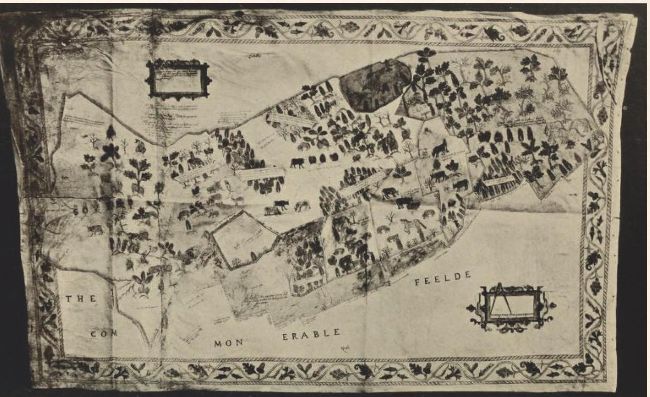
A sectional map of the manor of Ramsbury, Wiltshire.
Cities were few and far between, and apart from London, a super-city whose population reached 200,000 by the end of the sixteenth century, most provincial urban centres totalled no more than 12-14,000 people with market towns totalling a few thousand people.
For a long time, Norwich was England’s second city, based upon East Anglia’s importance to the wool trade which supplied materials for eastern and southern ports into the wool stapes in the Netherland and Germany; further trade links were forged with English possessions overseas in France, particularly Gascony. Coastal communities were, unsurprisingly, dependent on fishing. The opening up of the New World in the sixteenth century saw commercial growth from a wider range of mercantile ventures to the colonies in America, creating growth in western ports such as Bristol and Plymouth.
Ploughing familiar sources
Therefore, you will need to use familiar sources to locate your family’s main residence, and then research the history of the area to understand more about its economy, principal landowners, and key administrative districts.
Parish registers were introduced in 1536 and, on average, survive for most parishes from the 1620s. However, they can be increasingly tricky to use, as you go back in time, to make a positive identification of an individual, given the smaller number of name combinations and lack of corroborating data.
Equally, probate registers and wills can be found back into the medieval period, but only people of higher status with possessions to disperse would make a will; most people lived far more humble lives, and this is an important reality check – you may not be able to make a positive identification of an ancestor.