PHOTO FEATURE
THE BIO BOTS
BIO-INSPIRED ROBOTS THAT CAN FLY LIKE BIRDS AND CREEP LIKE COCKROACHES ARE HELPING RESEARCHERS TO UNDERSTAND MORE ABOUT HOW ANIMALS MOVE AND BEHAVE
WORDS: HAYLEY BENNETT
ROBOT ANIMALS
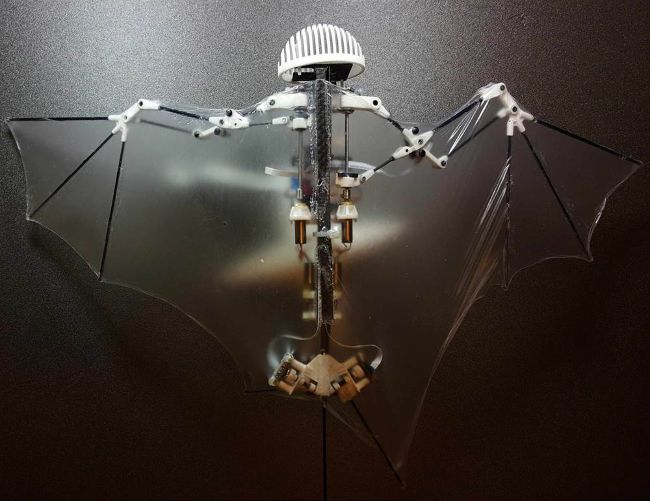
CALTECH/UIUC
BAT KIT CRAZY
Bat flight is fiendishly complex, requiring a system of muscles, bones and joints that incorporate folding of the wings in every wingbeat. The force that bat wings generate comes from a strong but flexible covering of skin, as opposed to the rigid feathers used by birds. Basically, of all the flying beasts in the world, if you’re going to pick one to try to emulate, don’t pick a bat. Except that’s exactly what US researchers did when they created this robotic bat, dubbed ‘B2’, to help them understand bat flight. In an article published in the journal Science Robotics, they explain how they stretched a 56-micrometre-thick (one micrometre = one-thousandth of a millimetre), siliconebased skin over B2’s wings, enabling it “to morph its articulated structure in mid-air without losing an effective and smooth aerodynamic surface”.
B2 can execute sharp diving manoeuvres and banking turns and, as well as providing a way to mimic and study the flight mechanisms of real bats, it may feed into the design of more agile flying robots of the future, helping us reach inaccessible places without sustaining damage or causing injury.