RHINOS
BACK FROM THE BRINK?
Can cutting-edge veterinary science and innovative cell biology save the northern white rhino from extinction?
by DR HELEN PILCHER
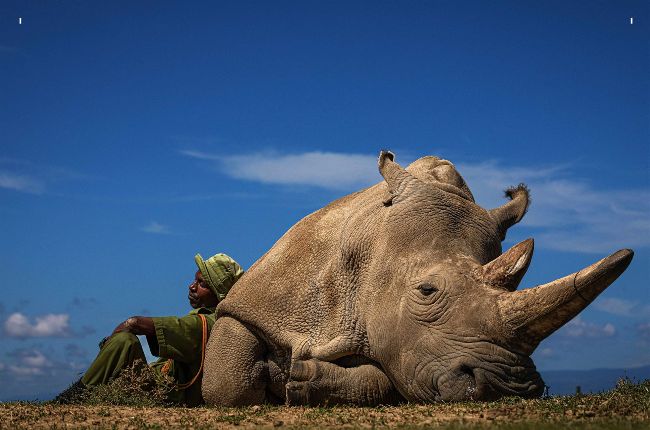
The last two northern white rhinos are protected by 24/7 armed security
MATJAZ KRIVIC/INSTITUTE ARTIST
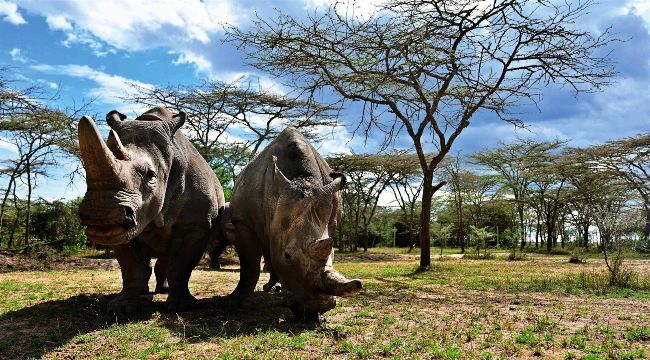
Najin (left) and her daughter Fatu are the last two northern white rhinos
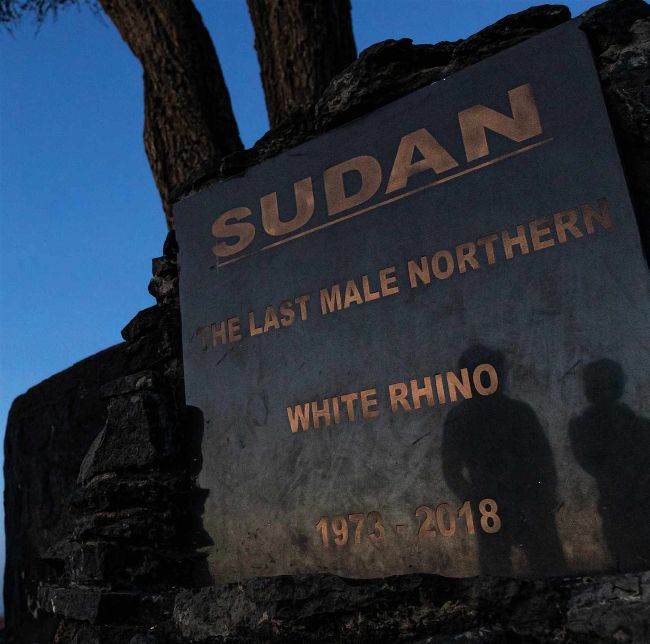
Grave of Sudan, the last northern white rhino male, in the middle of Ol Pejeta Conservancy plains
It’s early morning in Kenya’s Ol Pejeta Conservancy, and under a wide African sky, the last two northern white rhinos left on Earth go for a stroll. From time to time, they pause; tasselled ears twitching, as they lower their broad, flat muzzles to nibble the parched grass. Later in the day, as the mercury rises, they will retire to shady spot and have a siesta, watched over by the armed guards who protect them from poachers around the clock. The rhinos’ names are Najin and Fatu, and they are mother and daughter. Neither can reproduce naturally, and even if they could, there are no males left for them to mate with. This makes the northern white rhino as good as gone, or, as scientists would call it, ‘functionally extinct.’ Najin and Fatu are ‘dead rhinos walking.’
In decades gone by, this would have been the end of the line for the northern white rhino, but not anymore. For the last seven years, an international group of scientists have been working to bring this charismatic giant back from the brink. The BioRescue project involves cutting-edge veterinary science, cell biology and the creation of ‘test tube rhinos’. If all goes according to plan, the pitter patter of not-so-tiny rhino feet could be just a few years away.