INTERNET OF ANIMALS
THE INTERNET OF ANIMALS
SCIENTISTS ARE USING ELECTRONIC TAGS AND SATELLITES TO TRACK WILD ANIMALS AND CREATE A DATA NETWORK THAT COULD HELP US ADDRESS THE BIODIVERSITY CRISIS
by DR CLAIRE ASHER
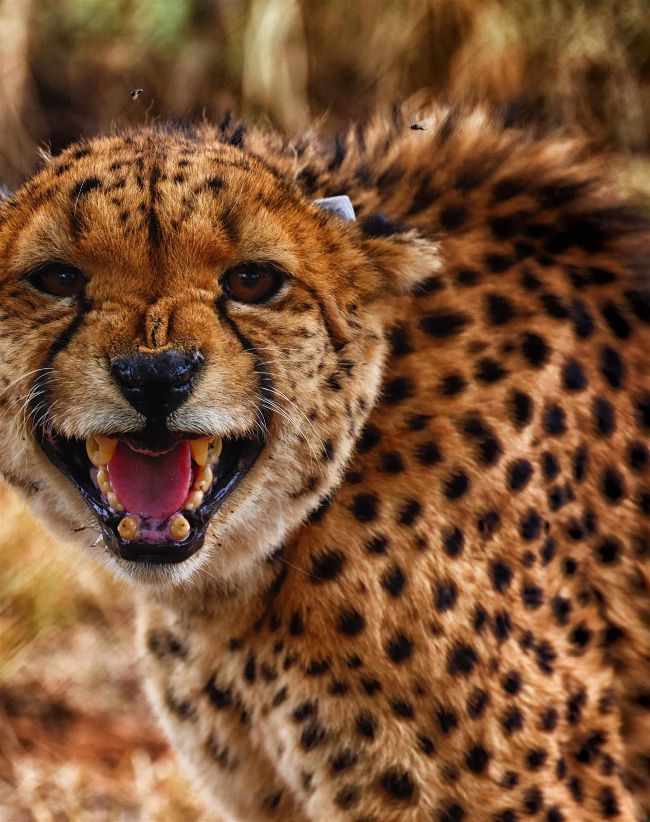
Project ICARUS is being used to map the behaviours and migrations of species around the world, including the cheetah
SERGIO IZQUIERDO
WATCH
David Attenborough explores Earth’s extraordinary animals in Planet Earth III https://bit.ly/4hk0q0e
Wildlife populations around the world are in crisis. Recent analysis by the World Wide Fund For Nature estimated that over the past 50 years, wildlife populations have reduced by 73 per cent. In the face of these unprecedented declines, it’s more important than ever that scientists understand the challenges animals face and how they’re responding to a changing planet. This requires data collection on a scale never attempted before – tracking the lives of animals at a global level – and scientists are turning to technology to make this mammoth task possible.
The development of radio-tracking technology has already opened many new research avenues for scientists interested in animal behaviour, but these studies have been limited by the large size of the tracking devices and the need to follow the animals with receivers, or retrieve the tags later, to access the data.
In industry, new technological advances such as miniaturised sensors and communication devices have enabled the development of large-scale wireless digital networks that track the location and status of objects, from shipping containers to factory equipment – known as the ‘Internet of Things’ or IoT.
ICARUS – the International Cooperation for Animal Research Using Space – aims to leverage this technology to create a global animal observation network to track and monitor wildlife on an unparalleled scale. The system uses state-of-the-art miniature transmitters to relay data about animals’ movements, activity and even health, to receiver antennae in space, allowing scientists to tap into a wealth of research data through their computers.
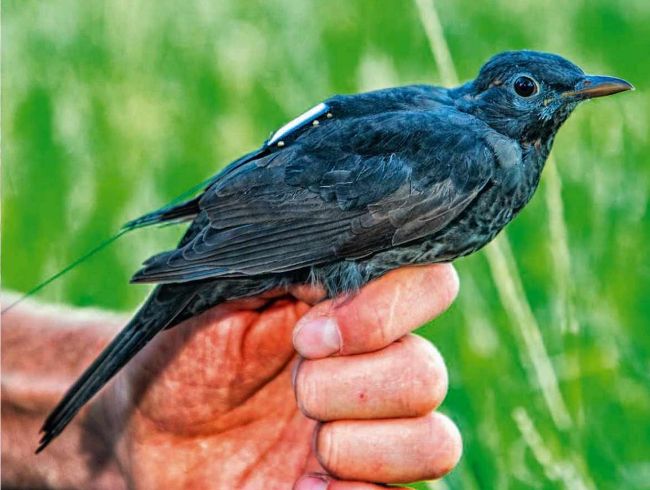
ABOVE LEFT
Blackbirds were the first animals to be fitted with ICARUS tags. The project is now tracking almost 700 of these birds across Europe