Vous consultez actuellement le France version du site.
Voulez-vous passer à votre site local ?
Dernière édition

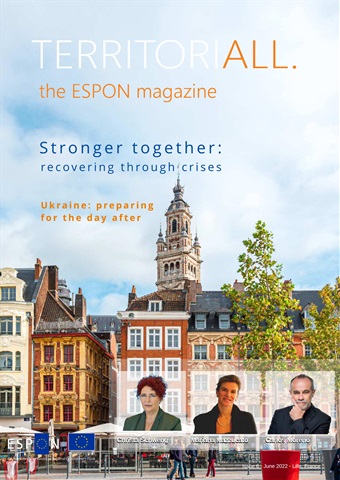
TerritoriALL Magazine Stronger together Retour à l'édition précédente

English
0 Critiques   •  English   •   General Interest (Education & Literary)
FREE
From the financial crisis to the pandemic and from there to the war in Ukraine, Europe is learning to live with overlapping crises. Resilience has become the new Holy Grail, as policies and tools at the European, national, regional and local level are adjusting or repurposing to address the new needs.
The director of ANCT, Yves Le Breton, explains how territorial issues were placed in the heart of the European debates.
EESC president, Christa Schweng, warns that the European social model needs to hold.
Professor Mariana Mazzucato explains why we need capacities and knowledge in the public sector and well-defined partnerships with the private.
Professor Carlos Moreno believes that the COVID pandemic is an opportunity to make better use of time and space.
DG Regio director, Peter Berkowitz, summarises the successes and the challenges of Cohesion Policy.
Nathalie Sarabezolles, chair of COTER, focuses on the need to safeguard cohesion.
Fransesco Molica, director of CPMR, opens the debate for the post-2027 programming period.
The war in Ukraine reminded us that peace and freedom are not for granted. MEP Urmas Paet analyses the next steps the EU has to take.
Even if the end of the war is not yet close, preparations for the reconstruction of Ukraine have started. The head of the EIB representation in Ukraine, Jean-Erik de Zagon, explains mechanisms that will be used to support the reconstruction of Ukraine. Oleksandr Slobozhan, executive director of the Association of Ukrainian Cities, and Eugenia Maruniak, director of the NAS Institute of Geography of Ukraine, provide insights of how Ukrainians think this reconstruction plan can maximise its results and rebuild a resilient urban environment adapted to the local needs.
More from issue 6: An eye-opening presentation on the impacts of COVID-19 on the European regions, the impact of COVID on the accessibility of services of general interest. Read for even more
read more read less
TerritoriALL Preview Pages TerritoriALL Preview Pages TerritoriALL Preview Pages TerritoriALL Preview Pages TerritoriALL Preview Pages TerritoriALL Preview Pages TerritoriALL Preview Pages

TerritoriALL

Stronger together From the financial crisis to the pandemic and from there to the war in Ukraine, Europe is learning to live with overlapping crises. Resilience has become the new Holy Grail, as policies and tools at the European, national, regional and local level are adjusting or repurposing to address the new needs. The director of ANCT, Yves Le Breton, explains how territorial issues were placed in the heart of the European debates. EESC president, Christa Schweng, warns that the European social model needs to hold. Professor Mariana Mazzucato explains why we need capacities and knowledge in the public sector and well-defined partnerships with the private. Professor Carlos Moreno believes that the COVID pandemic is an opportunity to make better use of time and space. DG Regio director, Peter Berkowitz, summarises the successes and the challenges of Cohesion Policy. Nathalie Sarabezolles, chair of COTER, focuses on the need to safeguard cohesion. Fransesco Molica, director of CPMR, opens the debate for the post-2027 programming period. The war in Ukraine reminded us that peace and freedom are not for granted. MEP Urmas Paet analyses the next steps the EU has to take. Even if the end of the war is not yet close, preparations for the reconstruction of Ukraine have started. The head of the EIB representation in Ukraine, Jean-Erik de Zagon, explains mechanisms that will be used to support the reconstruction of Ukraine. Oleksandr Slobozhan, executive director of the Association of Ukrainian Cities, and Eugenia Maruniak, director of the NAS Institute of Geography of Ukraine, provide insights of how Ukrainians think this reconstruction plan can maximise its results and rebuild a resilient urban environment adapted to the local needs. More from issue 6: An eye-opening presentation on the impacts of COVID-19 on the European regions, the impact of COVID on the accessibility of services of general interest. Read for even more


SELECTIONNER LE FORMAT :
Accès instantané

Offres numériques disponibles :

Numéro précédent numérique Stronger together
 
GRATUIT
LIRE MAINTENANT
Ce numéro et d'autres numéros antérieurs ne sont pas inclus dans un abonnement à l'UE. TerritoriALL abonnement. Les abonnements comprennent le dernier numéro régulier et les nouveaux numéros publiés pendant la durée de l'abonnement.
Malheureusement, ce titre ne publie plus de nouveaux numéros. Vous pouvez toujours acheter des anciens numéros, ou faire défiler vers le bas pour voir d'autres titres qui pourraient vous intéresser.
Les économies sont calculées sur la base d'un achat comparable de numéros uniques sur une période d'abonnement annualisée et peuvent varier par rapport aux montants annoncés. Les calculs sont effectués à des fins d'illustration uniquement. Les abonnements numériques comprennent le dernier numéro et tous les numéros réguliers publiés au cours de l'abonnement, sauf indication contraire. L'abonnement choisi sera automatiquement renouvelé s'il n'est pas résilié dans la section Mon compte jusqu'à 24 heures avant la fin de l'abonnement en cours.

TerritoriALL issue Stronger together

TerritoriALL  |  Stronger together  


From the financial crisis to the pandemic and from there to the war in Ukraine, Europe is learning to live with overlapping crises. Resilience has become the new Holy Grail, as policies and tools at the European, national, regional and local level are adjusting or repurposing to address the new needs.
The director of ANCT, Yves Le Breton, explains how territorial issues were placed in the heart of the European debates.
EESC president, Christa Schweng, warns that the European social model needs to hold.
Professor Mariana Mazzucato explains why we need capacities and knowledge in the public sector and well-defined partnerships with the private.
Professor Carlos Moreno believes that the COVID pandemic is an opportunity to make better use of time and space.
DG Regio director, Peter Berkowitz, summarises the successes and the challenges of Cohesion Policy.
Nathalie Sarabezolles, chair of COTER, focuses on the need to safeguard cohesion.
Fransesco Molica, director of CPMR, opens the debate for the post-2027 programming period.
The war in Ukraine reminded us that peace and freedom are not for granted. MEP Urmas Paet analyses the next steps the EU has to take.
Even if the end of the war is not yet close, preparations for the reconstruction of Ukraine have started. The head of the EIB representation in Ukraine, Jean-Erik de Zagon, explains mechanisms that will be used to support the reconstruction of Ukraine. Oleksandr Slobozhan, executive director of the Association of Ukrainian Cities, and Eugenia Maruniak, director of the NAS Institute of Geography of Ukraine, provide insights of how Ukrainians think this reconstruction plan can maximise its results and rebuild a resilient urban environment adapted to the local needs.
More from issue 6: An eye-opening presentation on the impacts of COVID-19 on the European regions, the impact of COVID on the accessibility of services of general interest. Read for even more
en savoir plus lire moins
TerritoriALL magazine is published by the ESPON EGTC.
In our issues, high-level politicians, local and national policymakers, researchers and academics present their views on different topics related to the EU development policies and their impact on Europe’s regions and cities.

En tant qu'abonné, vous bénéficierez des avantages suivants :


•  Une réduction sur le prix de vente conseillé de votre magazine
•  Les nouvelles éditions sont livrées sur votre appareil le jour même de leur sortie
•  Vous ne manquerez jamais un numéro
•  Vous êtes protégé contre les hausses de prix qui pourraient survenir plus tard dans l'année.

Vous recevrez 4 pendant une période de 1 an TerritoriALL abonnement au magazine.

Remarque : les éditions numériques ne comprennent pas les éléments de couverture ou les suppléments que vous trouveriez avec les copies imprimées.

Votre achat ici à Pocketmags.com peut être lu sur l'une des plateformes suivantes.


Vous pouvez le lire ici sur le site web ou télécharger l'application pour votre plateforme, n'oubliez pas de vous connecter avec votre nom d'utilisateur et votre mot de passe Pocketmags.

Apple Pocketmags Online Pocketmags Google Pocketmags
L'application Pocketmags fonctionne sur tous les appareils iPad et iPhone fonctionnant sous iOS 13.0 ou plus, Android 8.0 ou plus et Fire Tablet (Gen 3) ou plus. Notre lecteur web fonctionne avec n'importe quel navigateur compatible HTML5, pour PC et Mac nous recommandons Chrome ou Firefox.

Pour iOS, nous recommandons tout appareil pouvant exécuter le dernier iOS pour de meilleures performances et une meilleure stabilité. Les modèles plus anciens avec des spécifications de processeur et de RAM inférieures peuvent connaître un rendu de page plus lent et des plantages occasionnels de l'application qui sont hors de notre contrôle.
N/A
Sur la base de 0 Commentaires des clients
5
0
4
0
3
0
2
0
1
0
Voir les commentaires

Articles dans ce numéro


Vous trouverez ci-dessous une sélection d'articles dans TerritoriALL Stronger together.

Chat
X
Support Pocketmags