Está viendo la página Spain versión del sitio.
Le gustaría cambiar a su sitio local?
Última edición

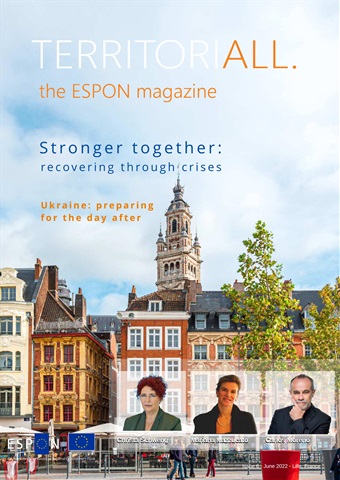
TerritoriALL Magazine Stronger together Edición anterior

English
0 Reseñas   •  English   •   General Interest (Education & Literary)
FREE
From the financial crisis to the pandemic and from there to the war in Ukraine, Europe is learning to live with overlapping crises. Resilience has become the new Holy Grail, as policies and tools at the European, national, regional and local level are adjusting or repurposing to address the new needs.
The director of ANCT, Yves Le Breton, explains how territorial issues were placed in the heart of the European debates.
EESC president, Christa Schweng, warns that the European social model needs to hold.
Professor Mariana Mazzucato explains why we need capacities and knowledge in the public sector and well-defined partnerships with the private.
Professor Carlos Moreno believes that the COVID pandemic is an opportunity to make better use of time and space.
DG Regio director, Peter Berkowitz, summarises the successes and the challenges of Cohesion Policy.
Nathalie Sarabezolles, chair of COTER, focuses on the need to safeguard cohesion.
Fransesco Molica, director of CPMR, opens the debate for the post-2027 programming period.
The war in Ukraine reminded us that peace and freedom are not for granted. MEP Urmas Paet analyses the next steps the EU has to take.
Even if the end of the war is not yet close, preparations for the reconstruction of Ukraine have started. The head of the EIB representation in Ukraine, Jean-Erik de Zagon, explains mechanisms that will be used to support the reconstruction of Ukraine. Oleksandr Slobozhan, executive director of the Association of Ukrainian Cities, and Eugenia Maruniak, director of the NAS Institute of Geography of Ukraine, provide insights of how Ukrainians think this reconstruction plan can maximise its results and rebuild a resilient urban environment adapted to the local needs.
More from issue 6: An eye-opening presentation on the impacts of COVID-19 on the European regions, the impact of COVID on the accessibility of services of general interest. Read for even more
read more read less
TerritoriALL Preview Pages TerritoriALL Preview Pages TerritoriALL Preview Pages TerritoriALL Preview Pages TerritoriALL Preview Pages TerritoriALL Preview Pages TerritoriALL Preview Pages

TerritoriALL

Stronger together From the financial crisis to the pandemic and from there to the war in Ukraine, Europe is learning to live with overlapping crises. Resilience has become the new Holy Grail, as policies and tools at the European, national, regional and local level are adjusting or repurposing to address the new needs. The director of ANCT, Yves Le Breton, explains how territorial issues were placed in the heart of the European debates. EESC president, Christa Schweng, warns that the European social model needs to hold. Professor Mariana Mazzucato explains why we need capacities and knowledge in the public sector and well-defined partnerships with the private. Professor Carlos Moreno believes that the COVID pandemic is an opportunity to make better use of time and space. DG Regio director, Peter Berkowitz, summarises the successes and the challenges of Cohesion Policy. Nathalie Sarabezolles, chair of COTER, focuses on the need to safeguard cohesion. Fransesco Molica, director of CPMR, opens the debate for the post-2027 programming period. The war in Ukraine reminded us that peace and freedom are not for granted. MEP Urmas Paet analyses the next steps the EU has to take. Even if the end of the war is not yet close, preparations for the reconstruction of Ukraine have started. The head of the EIB representation in Ukraine, Jean-Erik de Zagon, explains mechanisms that will be used to support the reconstruction of Ukraine. Oleksandr Slobozhan, executive director of the Association of Ukrainian Cities, and Eugenia Maruniak, director of the NAS Institute of Geography of Ukraine, provide insights of how Ukrainians think this reconstruction plan can maximise its results and rebuild a resilient urban environment adapted to the local needs. More from issue 6: An eye-opening presentation on the impacts of COVID-19 on the European regions, the impact of COVID on the accessibility of services of general interest. Read for even more


SELECCIONAR FORMATO:
Acceso instantáneo

Ofertas digitales disponibles:

Ejemplar digital único Stronger together
 
GRATIS
LEER AHORA
Este número y otros números atrasados no se incluyen en un TerritoriALL suscripción. Las suscripciones incluyen el último número de la revista y los nuevos números publicados durante el periodo de suscripción.
Lamentablemente, este título ya no publica nuevos números. Todavía puedes comprar números anteriores, o desplazarte hacia abajo para ver otros títulos que podrían interesarte.
Los ahorros se calculan sobre la compra comparable de números sueltos durante un periodo de suscripción anualizado y pueden variar respecto a los importes anunciados. Los cálculos son meramente ilustrativos. Las suscripciones digitales incluyen el último número y todos los números regulares publicados durante su suscripción, a menos que se indique lo contrario. El periodo elegido se renovará automáticamente a menos que se cancele en el área Mi cuenta hasta 24 horas antes del final de la suscripción actual.

TerritoriALL issue Stronger together

TerritoriALL  |  Stronger together  


From the financial crisis to the pandemic and from there to the war in Ukraine, Europe is learning to live with overlapping crises. Resilience has become the new Holy Grail, as policies and tools at the European, national, regional and local level are adjusting or repurposing to address the new needs.
The director of ANCT, Yves Le Breton, explains how territorial issues were placed in the heart of the European debates.
EESC president, Christa Schweng, warns that the European social model needs to hold.
Professor Mariana Mazzucato explains why we need capacities and knowledge in the public sector and well-defined partnerships with the private.
Professor Carlos Moreno believes that the COVID pandemic is an opportunity to make better use of time and space.
DG Regio director, Peter Berkowitz, summarises the successes and the challenges of Cohesion Policy.
Nathalie Sarabezolles, chair of COTER, focuses on the need to safeguard cohesion.
Fransesco Molica, director of CPMR, opens the debate for the post-2027 programming period.
The war in Ukraine reminded us that peace and freedom are not for granted. MEP Urmas Paet analyses the next steps the EU has to take.
Even if the end of the war is not yet close, preparations for the reconstruction of Ukraine have started. The head of the EIB representation in Ukraine, Jean-Erik de Zagon, explains mechanisms that will be used to support the reconstruction of Ukraine. Oleksandr Slobozhan, executive director of the Association of Ukrainian Cities, and Eugenia Maruniak, director of the NAS Institute of Geography of Ukraine, provide insights of how Ukrainians think this reconstruction plan can maximise its results and rebuild a resilient urban environment adapted to the local needs.
More from issue 6: An eye-opening presentation on the impacts of COVID-19 on the European regions, the impact of COVID on the accessibility of services of general interest. Read for even more
Seguir leyendo leer menos
TerritoriALL magazine is published by the ESPON EGTC.
In our issues, high-level politicians, local and national policymakers, researchers and academics present their views on different topics related to the EU development policies and their impact on Europe’s regions and cities.

omo abonado recibirá las siguientes ventajas:


•  Un descuento sobre el PVP de su revista
•  Las nuevas ediciones se envían a tu dispositivo el día de su lanzamiento
•  Nunca te perderás un número
•  Estás protegido de las subidas de precios que puedan producirse más adelante en el año

Recibirás 4 problemas durante un año TerritoriALL suscripción a la revista.

Nota: Las ediciones digitales no incluyen los artículos de portada ni los suplementos que encontraría en los ejemplares impresos.

Su compra aquí en Pocketmags.com puede leerse en cualquiera de las siguientes plataformas.


Puedes leer aquí en el sitio web o descargar la aplicación para tu plataforma, sólo recuerda iniciar sesión con tu nombre de usuario y contraseña de Pocketmags.

Apple Pocketmags Online Pocketmags Google Pocketmags
La aplicación Pocketmags funciona en todos los dispositivos iPad y iPhone con iOS 13.0 o superior, Android 8.0 o superior y Fire Tablet (Gen 3) o superior. Nuestro lector web funciona con cualquier navegador compatible con HTML5, para PC y Mac recomendamos Chrome o Firefox.

Para iOS recomendamos cualquier dispositivo que pueda ejecutar el último iOS para un mejor rendimiento y estabilidad. Los modelos anteriores con especificaciones de procesador y RAM inferiores pueden experimentar una renderización de páginas más lenta y fallos ocasionales de la aplicación que están fuera de nuestro control.
N/A
Basado en 0 Opiniones de los clientes
5
0
4
0
3
0
2
0
1
0
Ver comentarios

Artículos de este número


A continuación encontrará una selección de artículos en TerritoriALL Stronger together.

Chat
X
Soporte Pocketmags