Está atualmente a visualizar o Portugal versão do sítio.
Gostaria de mudar para o seu sítio local?
Última edição

TerritoriALL Magazine Stronger together Edição anterior

English
0 Comentários   •  English   •   General Interest (Education & Literary)
FREE
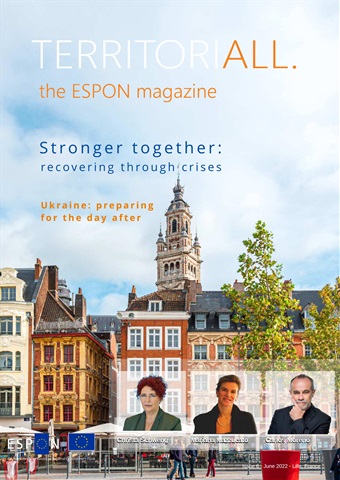
From the financial crisis to the pandemic and from there to the war in Ukraine, Europe is learning to live with overlapping crises. Resilience has become the new Holy Grail, as policies and tools at the European, national, regional and local level are adjusting or repurposing to address the new needs.
The director of ANCT, Yves Le Breton, explains how territorial issues were placed in the heart of the European debates.
EESC president, Christa Schweng, warns that the European social model needs to hold.
Professor Mariana Mazzucato explains why we need capacities and knowledge in the public sector and well-defined partnerships with the private.
Professor Carlos Moreno believes that the COVID pandemic is an opportunity to make better use of time and space.
DG Regio director, Peter Berkowitz, summarises the successes and the challenges of Cohesion Policy.
Nathalie Sarabezolles, chair of COTER, focuses on the need to safeguard cohesion.
Fransesco Molica, director of CPMR, opens the debate for the post-2027 programming period.
The war in Ukraine reminded us that peace and freedom are not for granted. MEP Urmas Paet analyses the next steps the EU has to take.
Even if the end of the war is not yet close, preparations for the reconstruction of Ukraine have started. The head of the EIB representation in Ukraine, Jean-Erik de Zagon, explains mechanisms that will be used to support the reconstruction of Ukraine. Oleksandr Slobozhan, executive director of the Association of Ukrainian Cities, and Eugenia Maruniak, director of the NAS Institute of Geography of Ukraine, provide insights of how Ukrainians think this reconstruction plan can maximise its results and rebuild a resilient urban environment adapted to the local needs.
More from issue 6: An eye-opening presentation on the impacts of COVID-19 on the European regions, the impact of COVID on the accessibility of services of general interest. Read for even more
read more read less
TerritoriALL Preview Pages TerritoriALL Preview Pages TerritoriALL Preview Pages TerritoriALL Preview Pages TerritoriALL Preview Pages TerritoriALL Preview Pages TerritoriALL Preview Pages

TerritoriALL

Stronger together From the financial crisis to the pandemic and from there to the war in Ukraine, Europe is learning to live with overlapping crises. Resilience has become the new Holy Grail, as policies and tools at the European, national, regional and local level are adjusting or repurposing to address the new needs. The director of ANCT, Yves Le Breton, explains how territorial issues were placed in the heart of the European debates. EESC president, Christa Schweng, warns that the European social model needs to hold. Professor Mariana Mazzucato explains why we need capacities and knowledge in the public sector and well-defined partnerships with the private. Professor Carlos Moreno believes that the COVID pandemic is an opportunity to make better use of time and space. DG Regio director, Peter Berkowitz, summarises the successes and the challenges of Cohesion Policy. Nathalie Sarabezolles, chair of COTER, focuses on the need to safeguard cohesion. Fransesco Molica, director of CPMR, opens the debate for the post-2027 programming period. The war in Ukraine reminded us that peace and freedom are not for granted. MEP Urmas Paet analyses the next steps the EU has to take. Even if the end of the war is not yet close, preparations for the reconstruction of Ukraine have started. The head of the EIB representation in Ukraine, Jean-Erik de Zagon, explains mechanisms that will be used to support the reconstruction of Ukraine. Oleksandr Slobozhan, executive director of the Association of Ukrainian Cities, and Eugenia Maruniak, director of the NAS Institute of Geography of Ukraine, provide insights of how Ukrainians think this reconstruction plan can maximise its results and rebuild a resilient urban environment adapted to the local needs. More from issue 6: An eye-opening presentation on the impacts of COVID-19 on the European regions, the impact of COVID on the accessibility of services of general interest. Read for even more


SELECCIONAR FORMATO:
Acesso imediato

Ofertas digitais disponíveis:

Edição digital única Stronger together
 
GRATUITO
LER AGORA
Esta edição e outras edições anteriores não estão incluídas numa TerritoriALL inscrição. As assinaturas incluem a edição regular mais recente e os novos números lançados durante sua assinatura e começam a partir de
Infelizmente, este título já não publica novas edições. Ainda é possível comprar edições anteriores ou ver outros títulos que possam interessar-lhe.
As poupanças são calculadas com base na compra comparável de edições únicas durante um período de subscrição anual e podem variar em relação aos montantes anunciados. Os cálculos destinam-se apenas a fins ilustrativos. As assinaturas digitais incluem a última edição e todas as edições regulares lançadas durante a sua assinatura, salvo indicação em contrário. O período escolhido será renovado automaticamente, exceto se for cancelado na área A minha conta até 24 horas antes do fim da assinatura atual.

TerritoriALL issue Stronger together

TerritoriALL  |  Stronger together  


From the financial crisis to the pandemic and from there to the war in Ukraine, Europe is learning to live with overlapping crises. Resilience has become the new Holy Grail, as policies and tools at the European, national, regional and local level are adjusting or repurposing to address the new needs.
The director of ANCT, Yves Le Breton, explains how territorial issues were placed in the heart of the European debates.
EESC president, Christa Schweng, warns that the European social model needs to hold.
Professor Mariana Mazzucato explains why we need capacities and knowledge in the public sector and well-defined partnerships with the private.
Professor Carlos Moreno believes that the COVID pandemic is an opportunity to make better use of time and space.
DG Regio director, Peter Berkowitz, summarises the successes and the challenges of Cohesion Policy.
Nathalie Sarabezolles, chair of COTER, focuses on the need to safeguard cohesion.
Fransesco Molica, director of CPMR, opens the debate for the post-2027 programming period.
The war in Ukraine reminded us that peace and freedom are not for granted. MEP Urmas Paet analyses the next steps the EU has to take.
Even if the end of the war is not yet close, preparations for the reconstruction of Ukraine have started. The head of the EIB representation in Ukraine, Jean-Erik de Zagon, explains mechanisms that will be used to support the reconstruction of Ukraine. Oleksandr Slobozhan, executive director of the Association of Ukrainian Cities, and Eugenia Maruniak, director of the NAS Institute of Geography of Ukraine, provide insights of how Ukrainians think this reconstruction plan can maximise its results and rebuild a resilient urban environment adapted to the local needs.
More from issue 6: An eye-opening presentation on the impacts of COVID-19 on the European regions, the impact of COVID on the accessibility of services of general interest. Read for even more
ler mais ler menos
TerritoriALL magazine is published by the ESPON EGTC.
In our issues, high-level politicians, local and national policymakers, researchers and academics present their views on different topics related to the EU development policies and their impact on Europe’s regions and cities.

Como subscritor, receberá as seguintes vantagens


•  Um desconto no PVP da sua revista
•  Novas edições entregues no seu dispositivo no dia do lançamento
•  Nunca perderá uma edição
•  Está protegido contra aumentos de preços que possam ocorrer no final do ano

Receberá 4 edições durante um ano TerritoriALL assinatura da revista.

Nota: As edições digitais não incluem os artigos de capa ou os suplementos que se encontram nos exemplares impressos.

Sua compra aqui no Pocketmags.com pode ser lida em qualquer uma das seguintes plataformas.


Pode ler aqui no sítio Web ou descarregar a aplicação para a sua plataforma, mas não se esqueça de iniciar sessão com o seu nome de utilizador e palavra-passe Pocketmags.

Apple Pocketmags Online Pocketmags Google Pocketmags
O aplicativo Pocketmags funciona em todos os dispositivos iPad e iPhone com iOS 13.0 ou superior, Android 8.0 ou superior e Fire Tablet (Gen 3) ou superior. Nosso leitor web funciona com qualquer navegador compatível com HTML5, para PC e Mac recomendamos Chrome ou Firefox.

Para iOS, recomendamos qualquer dispositivo que possa executar o iOS mais recente para melhor desempenho e estabilidade. Modelos anteriores com especificações mais baixas de processador e RAM podem apresentar renderização de página mais lenta e travamentos ocasionais de aplicativos que estão fora de nosso controle.
N/A
Com base em 0 Comentários de clientes
5
0
4
0
3
0
2
0
1
0
Ver críticas

Artigos desta edição


Segue-se uma seleção de artigos em TerritoriALL Stronger together.

Conversa
X
Suporte Pocketmags