THE FUTURE OF
SYNTHESIS
What does the future of the synthesiser look like? We sat down with some brands working at the innovative edges of synth design to try and find an answer
Although you can trace many of the general principles behind them back hundreds of years, synthesisers in the sense that we usually refer to them – instruments that create sound electronically – have only been around since the mid-20th century. In that time, somewhere around 60 or 70 years depending on what you count as the first true synthesiser, the technology used has come on in almost unimaginable leaps.
On one level, the evolution of synthesiser technology goes hand-in-hand with advances in the wider world of tech. Bob Moog’s first commercial synthesisers were launched into a world where computers were only just moving from vacuum tubes to integrated circuits, five years before the first moon landing. The decades that followed saw rapid advances in things like computing power, miniaturisation, speaker, screen and interface design, all of which have impacted the design of hardware and, latterly, software synthesisers. In the 2020s, the cutting-edge of synthesiser design is occupied by many of the same trends as wider consumer technology: wireless and portable design, cloud connectivity, machine learning and the potential of artificial intelligence.
There is something unique about the realm of synthesisers though, in that users and designers alike maintain a misty-eyed attachment to the designs and technologies used in those earliest commercial synths. This is analogous to cinema or photography, where certain practitioners stringently persist with working practices rooted in film, despite the obvious convenience of digital photography, or music listening, where the resurgence of vinyl flies in the face of streaming.
In all these cases, it would be inaccurate to say that those adhering to older forms are simply luddites.
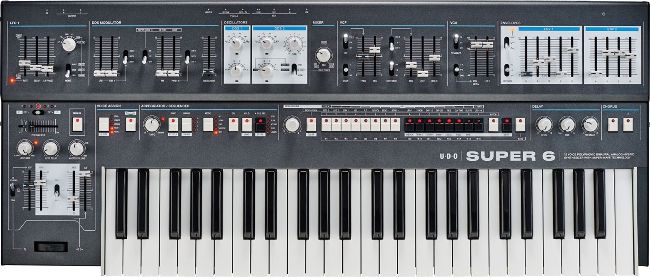
UDO’s Super 6 is an excellent example of vintage synth influence and cutting-edge tech combined
“THE NEXT TREND WILL BE SPATIAL SYNTHS, AND SOUND DESIGNERS WILL HAVE TO EXPLORE IT”

patten’s recent Mirage FM sets an early high bar for blending artistry with AI-rooted synthesis
It comes down to the difference between creative and merely functional technologies. It’s hard to imagine anyone defending the design of, say, a vintage washing machine, since that is a functional device aimed at achieving a set result – cleaning clothes – better and more efficiently with each new development. Artistic endeavours such as music or film-making can’t be boiled down so simply to a quest for efficiency. Many of the techniques and styles that came to dominate art and music in the 20th century went hand-in-hand with the specific technologies used to create them, and it’s not like these suddenly become obsolete with each new technological advancement.