PRODUCE LIKE...
Ploy
As he launches his own label, one of the UK’s finest leftfield producers talks workflow secrets
.

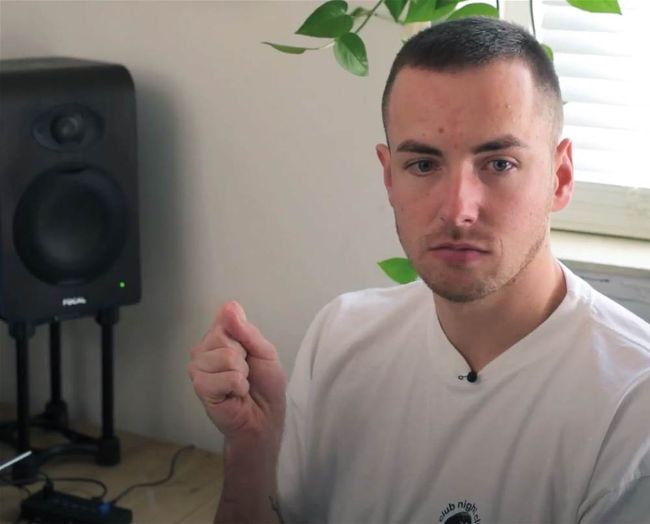
Ploy’s minimal but effective studio
Over the course of the past decade, Ploy – real name Sam Smith – has carved out a reputation for himself as one of the most innovative artists in the UK underground. His club-centric sound, which combines elements of dark British techno with numerous global percussive diversions has seen him land on lauded labels like Hessle Audio, Hemlock, Timedance and L.I.E.S.
Following the Covid period, he’s recently returned with a new label and party series, both named Deaf Test. The label launched late last year with Ploy’s own Bollywoodsampling Rayhana EP. To mark the occasion, we visited his South London studio…
Why did you choose to launch your own label now?
“It was just to set up my own platform, really, so I could have full control. You reach a point where you do stuff for other labels – they’re good springboards, especially when you’re getting established, as they push you further, which is what you need at the start – but after a while you come to the conclusion that you can do all this yourself and have full creative control. I’m a bit more established now, so I just wanted that foundation to build my own thing on, rather than always being associated with someone else’s label.”
Deaf Test is also the name of a club night you’ve been running recently… “
Yeah, I’m doing a party with the same name. They started in 2021. This was all pandemic thinking, basically. It’s all stuff that I’d always known I’d wanted to do in the future, but I wouldn’t have got around to it because I’ve always been so busy with gigs and stuff. But because everything slowed down it gave me a chance to work this stuff out. I wanted to go back into normality with some sort of plan.”
Is there any specific thinking around who you put on at those nights?
“I just wanted to push a very particular sound and aesthetic that represents all of my interests. That’s a similar ethos to the label too, basically. It’s about drawing on influences I feel are a little underrepresented, and trying to make it more coherent.”