MAYA SHENFELD
An existential ode to climate change, Berlinbased composer Maya Shenfeld talks to Danny Turner about her evocative second album, Under the Sun
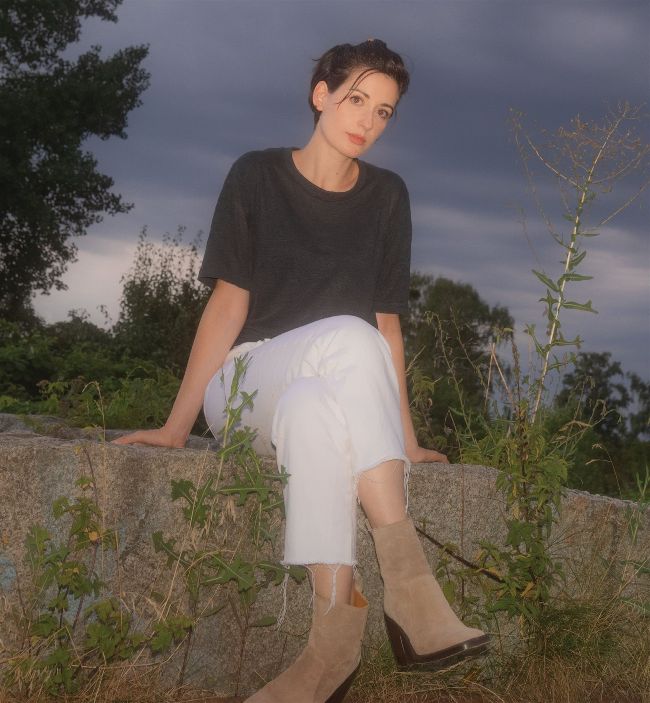
© Neven Allgeier
Having completed a degree in classical guitar in her home city of Jerusalem, electroacoustic composer Maya Shenfeld relocated to Berlin to study contemporary music performance and composition. Influenced by the city’s avant-garde music/art scene, Shenfeld began to slowly intersect with the world of electronic music, scoring short films and recording sync music for EMI’s production music library before releasing her conceptual, classically influenced debut album In Free Fall in 2022.
Continuing to explore the electroacoustic world at site-specific sound installations alongside her solo electronic sets, Shenfeld chanced upon visual artist Pedro Maia.
Together, the duo decided to capture field recordings, Super 8 film and drone shots from an active marble quarry in southern Portugal for an audio-visual live show. However, Shenfeld went one step further, layering synths, woodwind, voice and choir for a second solo album. Deserved of deep listening, Under the Sun is a primal, brooding LP that meditates on the looming climate emergency and hopes of enacting change.
You studied classical guitar. Was that something your parents encouraged you to do or were you a willing participant?
“My parents aren’t musicians at all, but they were very supportive of my passion for music. I played piano as a young kid but stopped at some point, probably because the teacher was a bit strict, but everybody said I was musical and maybe there was a different instrument I could try out. I wanted to be the cool kid playing guitar in a rock band, so I somehow ended up at a classical music school conservatory, which was brilliant and definitely gave me a strong foundation, even if it was quite a process to untangle myself from the classical framework.”
That eventually developed into wanting to experiment with electric guitars and pedals…
“That happened in Berlin. I came here because I wanted some time abroad and being good at an instrument made it possible for me to apply for studies when I was 20 years old. I also studied a little bit of jazz and was playing a Les Paul guitar through a Fender Blues Junior amp to get a really warm sound. Continuing from that, I played in a punk band and started experimenting with a pedal board setup and various distortion pedals, reverbs, delays and compressors.”
In Berlin, you no doubt had access to a more developed music scene and means of obtaining more technology?
“Although it’s very difficult to talk about Jerusalem and Tel Aviv these days, it still feels that a huge part of my musical trajectory stems from there rather than Berlin. I come from an old-world classical music education where you have access to a lot of music study, really amazing teachers and good bands and ensembles. The academic side was quite old school and very much focused on orchestration, counterpoint and theory, whereas the electronic music part was built independently and I have to credit the sound of Berlin for that. I’m not a huge techno/club person, but I really appreciated having access to places like Kraftwerk Berlin or even clubs like Berghain, where the sound system really intrigued me in terms of how certain styles of music are made and produced.”