NATHAN MICAY
The multi-talented producer tells Matt Mullen about the creation of his playful new album and lauded score for HBO series Industry
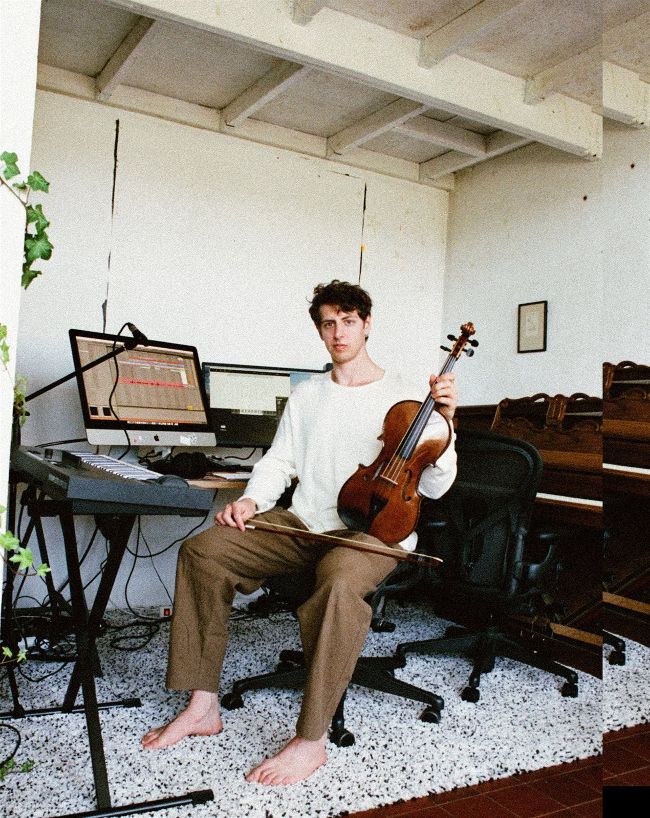
© Nyima Chatelain
Electronic music can be a serious place. Between techno’s ominous thump and EDM’s sweaty braggadocio, it’s easy to lose sight of the fact that, essentially, we’re all just here to have fun. Sure, electronic music is art, and it’s also how some of us make a living. But if we cast our minds back to remember the reason we opened up a DAW or picked up a synth in the first place, it’s the sheer joy that’s sparked by making and rearranging sounds, and the promise of where that could lead, that got most of us hooked.
Nathan Micay’s music bottles that feeling and amplifies it to the nth degree. After debuting in 2012 under the alias Bwana, Micay began working under his own name in 2018, releasing a pair of albums for Scottish imprint LUCKYME and scoring the critically acclaimed HBO drama Industry. The producer’s latest release, To The God Named Dream, brings a much-needed sense of optimism and a touch of humour to a genre that’s often guilty of taking itself a little too seriously. Aesthetically considered but joyfully unpretentious, the record mashes up a cacophony of sounds and influences into eleven riotous tracks that expose the old adage ‘less is more’ for the lie that it really is.
“I’M NOT MUCH OF A GEARHEAD, BUT I’M A HUGE KONTAKT LIBRARY, OBSCURE PLUGIN HEAD. THAT’S WHERE ALL MY GOODNESS COMES FROM”
In Micay’s world, more is in fact more, and these songs are all the better for it. Synths are stacked sky-high as stadium-sized melodies soar across the stereo field, trailing a shimmering tail of reverb and delay in their wake. In the same track, you’ll hear trance synths, 808s and breakbeats happily coexist with live banjo, Nickelodeon cartoon samples, gated Motown vocal hooks and ’90s vinylscratches: emerging from this blissful chaos is the undeniable feeling that both we and Micay are having a damn good time.
We caught up with Micay from his home studio in Copenhagen to find out more about how Taylor Swift, obscure Kontakt libraries and soft synth preset-tweaking inspired the making of his latest album.