wildlife review
Make a difference for wildlife
Our annual review shows we’re all doing our bit for garden wildlife – giving them food, water and habitat. GW Wildlife Editor Kate Bradbury shares her insights into the results, the winners, and the species that need even more support
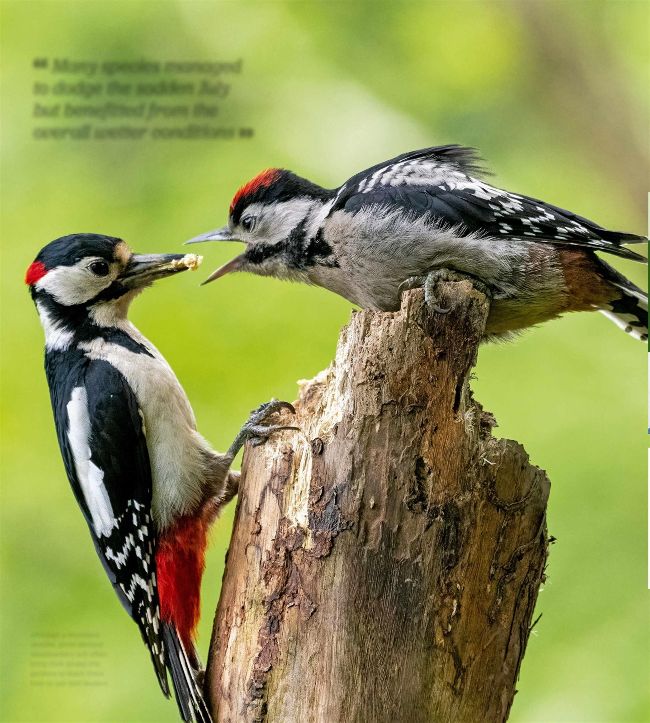
Although a woodland species, great spotted woodpeckers will often bring their young into gardens to teach them how to use bird feeders
PHOTOS: PAUL DEBOIS; GETTY/ANDY DAVEY
"Many species managed to dodge the sodden July but benefitted from the overall wetter conditions"
It’s been a difficult couple of years, weather-wise, with 2022 seeing the hottest temperatures ever recorded in the UK and 2023 bringing the wettest July for 14 years.
How has this affected our wildlife? Respondents to our latest wildlife review reported later sightings of bees and butterflies in 2023, along with fewer bees, birds nesting later than usual and, sadly, producing fewer fledglings per brood. Happily they also saw more of our much-loved hedgehogs, along with dragonflies and damselflies, too. Nationally, 2023 was a real year of the butterfly, with charity Butterfly Conservation reporting an increase in red admiral sightings of nearly 350 per cent compared to 2022.
It seems that many species managed to dodge the sodden conditions of last July but benefitted from the overall wetter conditions – caterpillars have lusher leaves to eat when there’s plenty of rain, while flowers produce more nectar. These national sightings were reflected in our research, with no surprises that numbers of the red admiral are up. But how does the data compare with how wildlife fared in your garden? Read on to find out.
A boost for birds
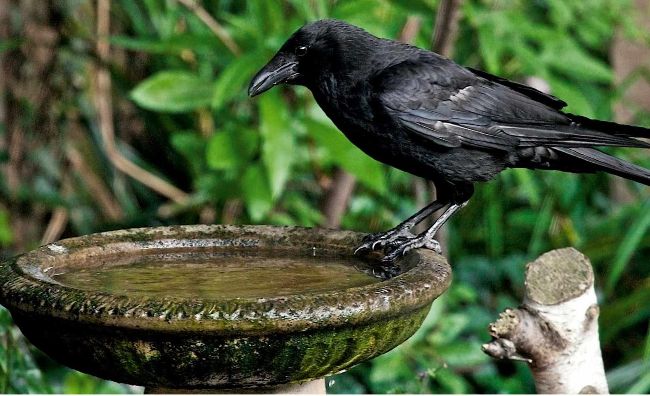
Bird baths are vital all year long, so ensure they are always full
Birds remain the most common garden visitors, and sightings remain consistent with previous years’ figures. Interestingly, sightings of great spotted woodpecker and carrion crow were up by 2.4 and 2 percentage points respectively.
Both species are adaptable – perhaps they were taking advantage of our gardens during the dry spring?
The great spotted woodpecker is a woodland species but tends to come into gardens more frequently during breeding season (April to May) and parents will also bring their fledglings into gardens to teach them how to use bird feeders. Like many birds, great spotted woodpeckers feed insects and other invertebrates to their chicks. The dry spring reduced availability of this food and our gardens may have provided a lifeline.