MINOR PENTATONIC LICKS
Simon Barnard guides you through a series of stylistic examples to improve how you use the Minor Pentatonic scale in your playing.

Zakk Wylde plays Pentatonic scales with fiery pace and passion
ROY ROCHLIN/GETTY IMAGES
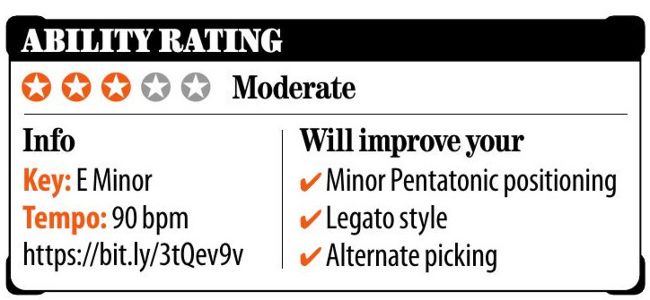
The Minor Pentatonic scale is without a doubt one of the most popular scales within a guitarist’s toolkit. From the early blues and rock and roll of the 40s and 50s, through to the psychedelic sounds of the swinging 60s; the classic rock of the 70s and 80s, to 90s alternative rock and Britpop; continuing throughout most guitar genres of the 2000s onwards, the Minor Pentatonic scale has always had a place in popular music. With its guitar-friendly formula consisting of two-notes-per-string patterns, this scale sits well under the fingers and has enough melodic and harmonic content to be used in most styles of music. The Minor Pentatonic consists of five notes, which means that there are five positions of the scale that can be played across the entire fretboard. If you are unsure of how to play all of these shapes, you should look them up and commit them to memory. This will help you break out of your tried and tested licks and enable you to navigate different octaves and areas of the neck, opening up your creativity and technique. Learning these shapes can then help you understand how to play many more scales and arpeggios, using the CAGED system.