HOW TO BUILD A HOUSE
PART EIGHT: BUILDING THE SUPERSTRUCTURE
In our in-depth series, self-build expert Mark Stevenson shares the stages of building your own home, from foundations through to completion.This month, he looks at building with masonry
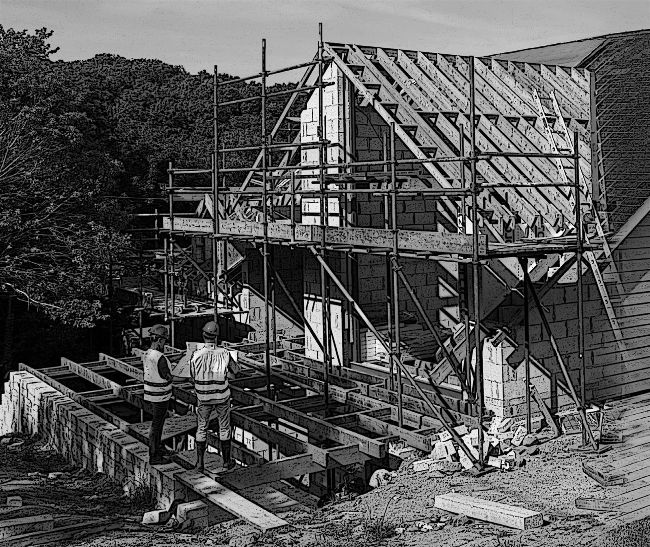
IMAGE: POTTON
According to the National Custom and Self Build Association, brick and block (masonry) is the second most popular build system, with aself-build market share of 35% compared to structural timber, which has 40%. This month, I’ll take adetailed look at masonry and will explain everything you need to know when building with this popular system.
WHAT IS A MASONRY BUILDING SYSTEM?
When we refer to masonry as a building system, we’re actually talking about the structural inner leaf, which is built most commonly in concrete blocks. This inner leaf of blockwork forms the engineered structure of the house and provides the support to roofs, windows, doors and external cladding. Unfortunately, most of the types of concrete blocks offer little in the way of thermal resistance and therefore the block inner leaf generally does little to improve thermal performance — its purpose is structural. There are exceptions, such as lightweight thermal blocks, but even these will require additional insulation to meet the latest requirements of Building Regulations.
MARK STEVENSON
Has worked in construction for 30 years and following a long career in housebuilding he became managing director for Potton, designers and manufacturers of bespoke self-build homes.
Masonry-based building systems are popular because of the ease with which they can be used. They are well understood by most designers and building contractors, and have proven to be reliable over hundreds of thousands of homes and over many decades. While they might be a relatively slow building method compared with timber systems, the materials are cheap and readily available.
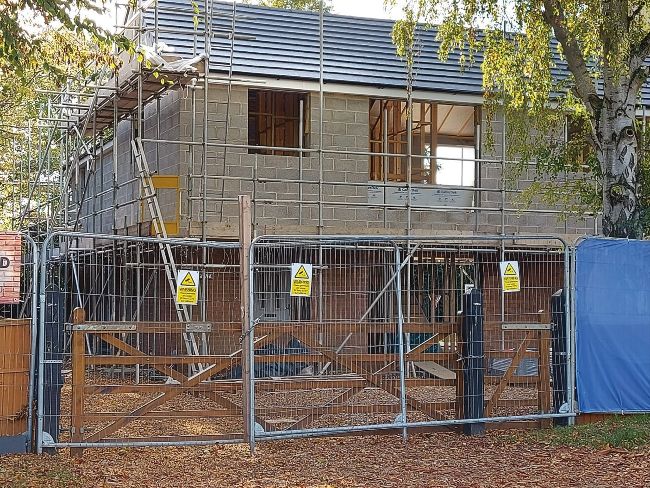
IN DEMAND Brick and block is the second most popular build system.
Amasonry wall is formed with an inner leaf of concrete blocks and external cladding (facing bricks in this case) to form acavity. The two leaves are joined together with wall ties. Thermal performance is provided by insulation fitted in the cavity, which can be arigid board such as Kingspan Therma, which fits against the inner block and is held in position with the wall ties and discs, leaving a 50mm cavity.