Horse health
Allergy ALERT
From skin to respiratory, being prepared for different equine allergies will help you head off more serious problems.
BY NANCY S. LOVING, DVM
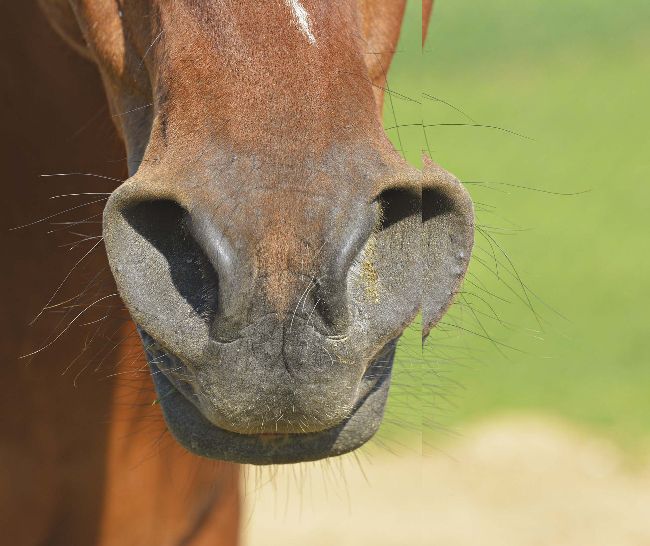
Flared nostrils, even at rest, are one sign of airway allergies like equine asthma.
MARIE CHAROUZOVA /SHUTTERSTOCK
A spring day of good weather, perfect for a ride. As you amble to the barn to saddle up, you hear coughing. Turning the corner, you see the coughing culprit is your horse. He seemed fine when you rode a few days ago, so what happened?
In another barn, a rider grabs the grooming kit to brush her horse in preparation for the saddle. As she runs her hand over his neck, she feels, and then sees, numerous bumps, some of which have merged to form large bumps. What is going on with these horses?
A TEEMING WORLD
Unseen by the naked eye, the world is abundant in proteins and substances that can incite an allergic response. These allergens may be inhaled, ingested, or may affect a horse through topical contact. You’ll be tipped off to signs of trouble when you notice your horse has itching, hives, or breathing problems.
Allergies are common throughout the human and animal world, and horses are no exception. Usually, horses manage in their environment just fine without developing obvious signs that microscopic compounds are affecting them. Allergies happen when a horse’s immune system overreacts to a foreign protein, goes on the offense and becomes over-sensitized.