Horse health
Understanding impactions
Be prepared with prevention strategies against this potentially serious type of colic.
BY ANNA O’BRIEN, DVM
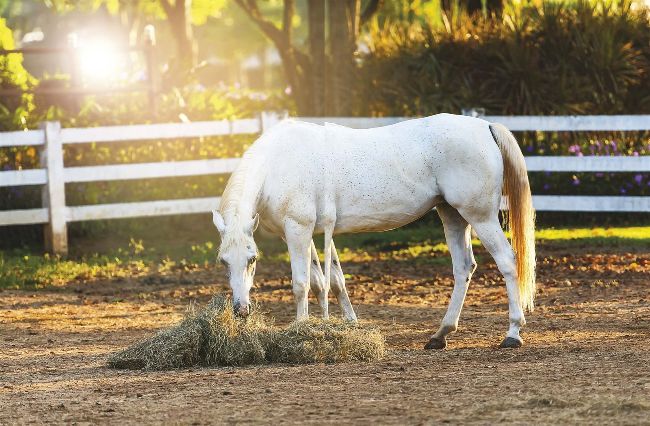
Feeding horses off dirt or sand can be a cause of impaction colic.
TIGERSTOCKS/SHUTTERSTOCK
Many horse owners understand the term colic to mean abdominal pain in horses. Although there are several causes of colic, impactions are one of the most frequently encountered types. Let’s take a closer look at this common cause of abdominal pain to better understand early warning signs, treatment options, and prevention.
IMPACTION CAUSES
In basic terms, an impaction refers to an obstruction of the gastrointestinal tract. This is typically caused by a clump of ingesta (feed), but can also be made up of sand or other foreign material, such as hair or bailing twine, or rarely, a growth or tumor. Impactions most frequently occur in the portion of the horse’s large intestine called the large colon, but sometimes occur in the cecum or small colon.
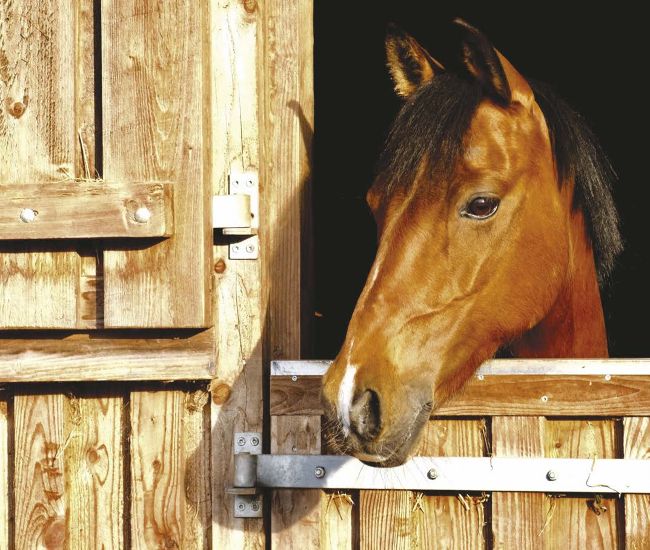
Whenever possible, try to avoid abrupt changes in exercise, such as going from pasture living to stall-bound, to help avoid impactions.
GABRIELE RITZ/SHUTTERSTOCK
Due to the length, complexity, and sheer volume of a horse’s digestive tract, an interruption in the flow of material through it can quickly become a very serious issue. A horse’s large colon is 10 to 12 feet long, and along with the cecum, can hold up to 30 gallons of fluid.