HOW GLASS IS MADE
From its ancient origins to modern-day technology, from bottles to double glazing, what makes this material so versatile?
Words by Ailsa Harvey
It’s usually encountered as a transparent pane, so it is easy to look past - or right through - glass. But have you ever stopped to think not about the view beyond your window, but of the window itself? This impressively clear, firm material before you is just one of many variations of glass. Glass can be transparent or opaque, coloured or clear, bullet-stoppingly thick or wafer thin. Every day we use it, whether we drink from a bottle made out of it, decorate our homes with it or tap the touchscreens on our mobile phones and tablets. Glass is everywhere.
It can be dangerous. When broken it can form shards that can inflict nasty injuries, while in its ornamental form it’s so delicate that an accident can mean a priceless artefact is shattered into thousands of pieces. Either way, glass is usually approached with an element of caution. But how did it come to hold these properties?
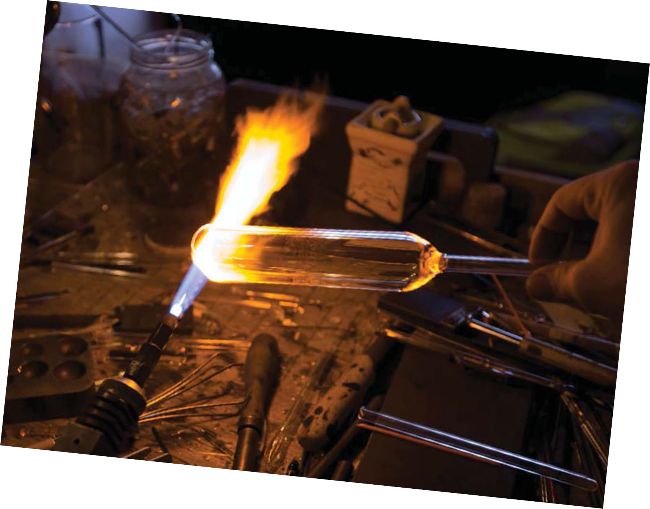
A variety of specialised tools are used in glass-making
“Glass can be transparent or opaque, coloured or clear”
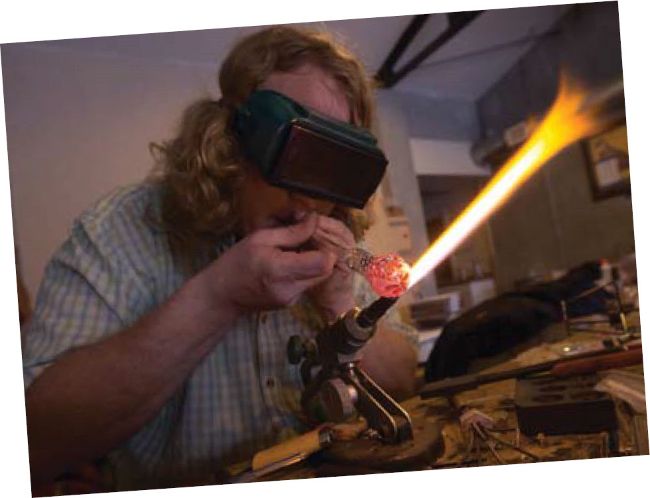
Safety is with molten glass
Common glass types
Annealed
This glass undergoes a slow cooling process,
which builds its durability. Without using advanced cooling methods, the molten glass is left to cool in a controlled way until it reaches room temperature. This reduces internal stresses that may cause breakages.
Heat strengthened
After annealed glass is produced, it can be reheated to temperatures of 700 degrees Celsius and then left to cool again. This doubles the strength of the glass by removing any thermal stress created by pressure changes.