WHAT IS LIGHT POLLUTION?
How artificial light is keeping the true night sky in the dark
WORDS SCOTT DUTFIELD
DID YOU KNOW? Around 80 per cent of Americans can’t see the Milky Way
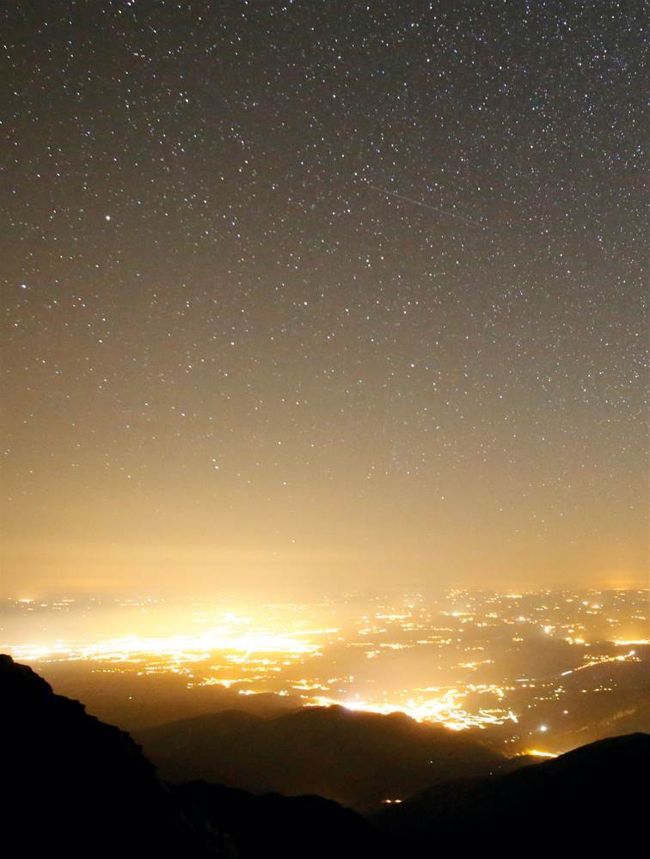
Light pollution over Tarbes, France, taken from the Pic du Midi Observatory
THE BRIGHTEST CITIES ON EARTH
The global urban average is around 18.9 radiance units, which is a little brighter than West Yorkshire
Cities by radiance
1
MOSCOW,
RUSSIA
152.27
2
SAINT
PETERSBURG,
RUSSIA
152.24
3
MECCA
,
SAUDI
ARABIA
139.41
4
CHELYABINSK
,
RUSSIA
136.43
5 KUWAIT CITY, KUWAIT 131.39
6 RIYADH, SAUDI ARABIA 127.29
7 CALGARY, CANADA 124.32
8 EDMONTON, CANADA 123.71
9 KAZAN, RUSSIA 115.46
10 HELSINKI, FINLAND 111.54
P ollution comes in many forms, such as plastic waste, greenhouse gases and sewage. However, there’s one type of pollution that often gets overlooked, and it can have serious implications for our environment and even our health.
Light pollution, or photopollution, is the presence of excess artificial light and is a result of urbanisation and industrialisation. Street lighting, domestic and commercial lights, vehicles and security lights all contribute to the creation of a dome-like shield of light pollution called skyglow. Along with skyglow, light pollution consists of glare, light trespass and clutter. Glare relates to light that can cause direct visual discomfort, whereas light trespass is light that escapes from sources such as bedroom windows. Clutter is the excessive grouping of lights.