30 AMAZING ANSWERS TO THE BIGGEST QUESTIONS IN THE UNIVERSE
WORDS ANDREW MAY, MARK SMITH & ROBERT LEA
DID YOU KNOW?
Air density at sea level is over a million times greater than at the Kármán line
1 WHERE DOES SPACE START?
There’s an easy answer to this question: space starts at the top of Earth’s atmosphere. The hard part is saying just where that ‘top’ is. The fact that the atmosphere doesn’t end abruptly, but just gets thinner and thinner, means there’s no hard and fast upper bound you can put on it. To some extent, it’s simply a question of coming up with an easily memorable number that’s in the right ballpark. To NASA and the US military, for example, space starts at an altitude of 50 miles. To the international community, on the other hand, it starts at 100 kilometres, which at 62 miles is a little higher. In the middle of the 20th century, a Hungarian-American aerospace engineer named Theodore von Kármán asked a simple question: At what altitude does the speed needed to keep an aircraft aloft through aerodynamic lift become so high that it exceeds orbital velocity? He did the necessary calculations, then rounded the answer to that memorable figure of 100 kilometres, or 62 miles. This altitude is now known as the ‘Kármán line’ in his honour.
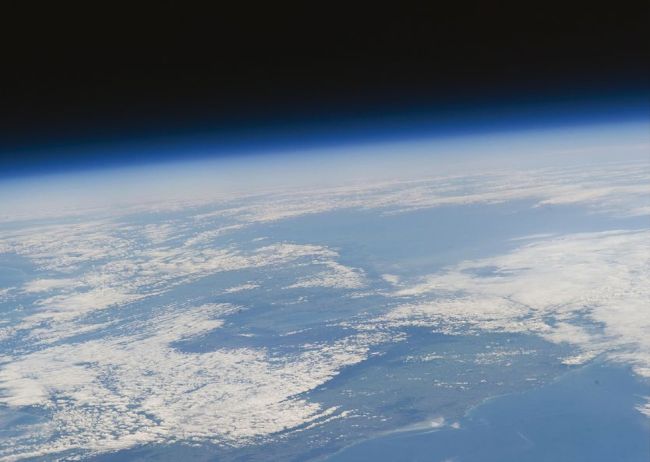
Earth’s atmosphere appears very thin in this view from the International Space Station
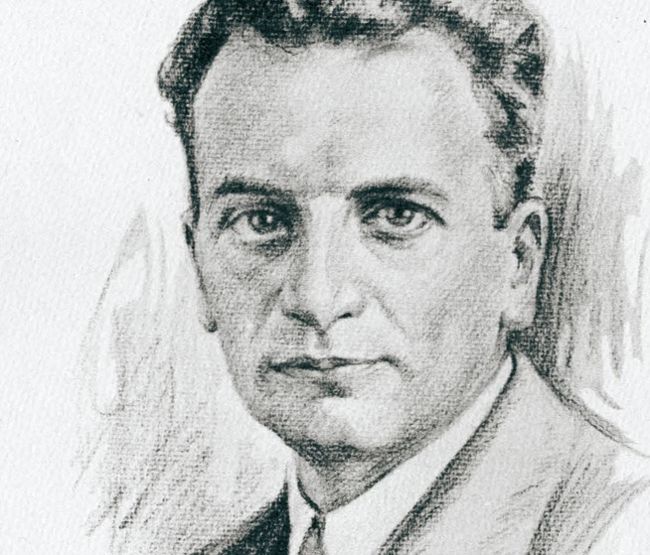
Theodore von Kármán, who came up with the theory behind the Kármán line
2 WHAT I FEARTH STOPPED SPINNING?
Earth has so much rotational energy – over 200 quintillion gigajoules – that it will take billions of years to lose it all. If it slowed to the point where it was tidally locked to the Sun, one side would be in perpetual daylight and the other side in perpetual night.
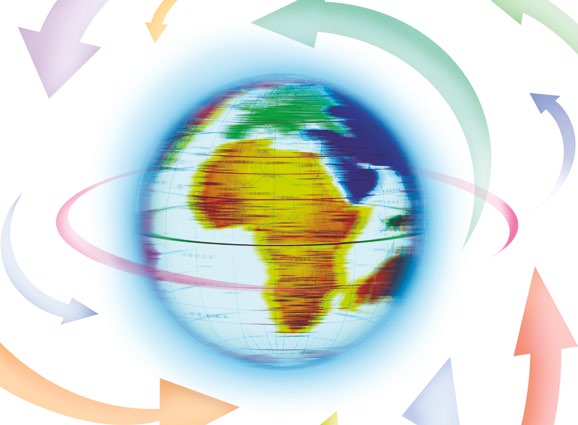
Earth has so much rotational momentum it would be hard to stop it spinning
3 WHERE ARE THE WORLD’S SPACEPORTS?
Spaceports are dotted all over the world in locations where you’re most likely to find functioning private or state-run space programs. Since they were first developed, 28 spaceports have been used to launch satellites into orbit, with 22 active today.
The Kennedy Space Center at Cape Canaveral in Florida, is probably the world’s best known spaceport, The privately operated Rocket Lab Launch Complex One in New Zealand serves as a commercial launch site. The European Space Agency’s Guiana Space Centre in French Guiana, The Jiu Quan Satellite Launch Center, China, and the Baikonur Cosmodrome in Kazakhstan are among the other best known ones.
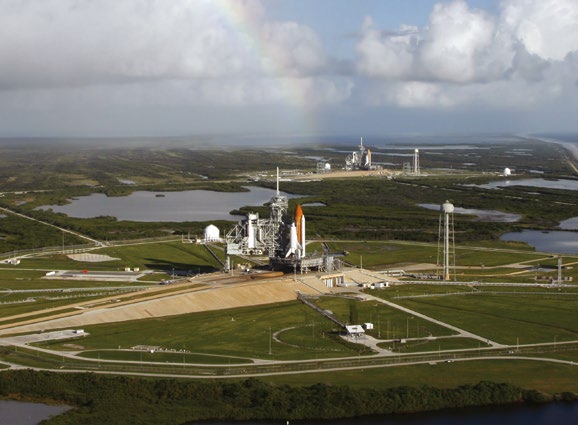
Space Shuttle Atlantis (foreground) sits on Launch Pad A and Endeavour on Launch Pad B at the Kennedy Space Centre in Florida
© Getty / NASA / NOAA
4 WHAT IS LOW-EARTH ORBIT?
In very simple terms, a low-Earth orbit (LEO) is exactly what it says: an orbit around Earth at an altitude that lies towards the lower end of the range of possible sustainable orbits. The majority of satellites are to be found in LEO, as is the International Space Station. In order to remain in such an orbit, a satellite has to travel at around 17,500 miles per hour, at which speed it takes around 90 minutes to complete an orbit of the planet.
LEO 62 TO 930 MILES Most satellites – and the International Space Station – are found in low-Earth orbit.
MEO 3,100 TO 6,200
MILES Medium-Earth orbit is useful for certain applications, such as navigation satellites.
GEO 22,370 MILES Geostationary satellites rotate at the same speed as Earth, so they appear to ‘hover’ over a fixed location.
HEO LEO TO GEO While LEO, MEO and GEO are near-circular, highly elliptical orbits alternate between low and high altitudes.
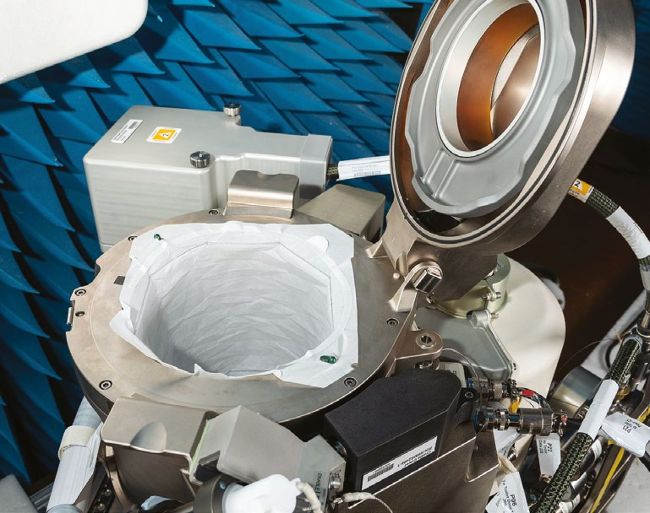
A space toilet is a bit like an ordinary toilet, but more complex and much more expensive
5 HOW DO ISS ASTRONAUTS GO TO THE TOILET?
Pretty much like anyone on Earth, except that waste is directed where it needs to go with the aid of air currents rather than gravity. Having said that, space toilets aren’t cheap – the latest one on the ISS cost $23 million (£18.5 million) to develop.
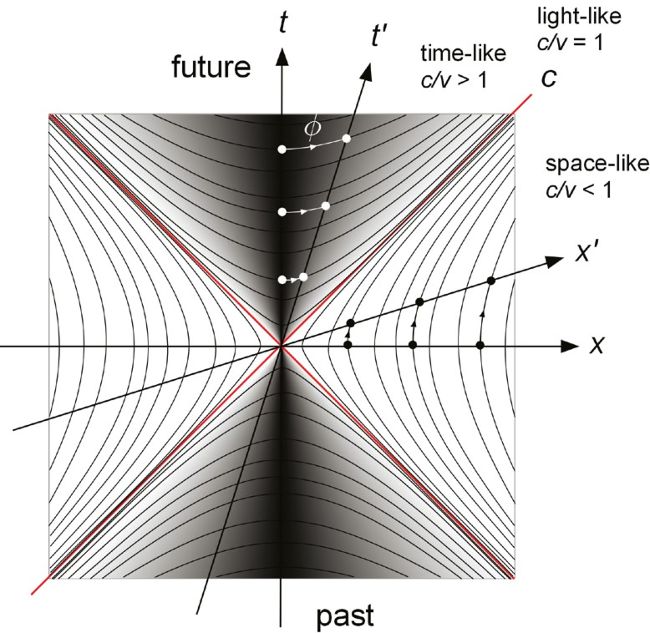
The speed of light, c, is a fundamental property of the geometry of space-time
6 IF LIGHT SPEED IS IMPOSSIBLE, HOW DOES LIGHT ACHIEVE IT?
The speed c, which we call light speed, is a basic parameter affecting the geometry of space and time. One of its consequences is that objects possessing mass can never reach that speed, but another is that massless particles – such as photons of light – must always travel at c.