Inside the first MODERN COMPUTER
Why the Difference Engine wasn’t finished in time to make history
WORDS SCOTT DUTFIELD
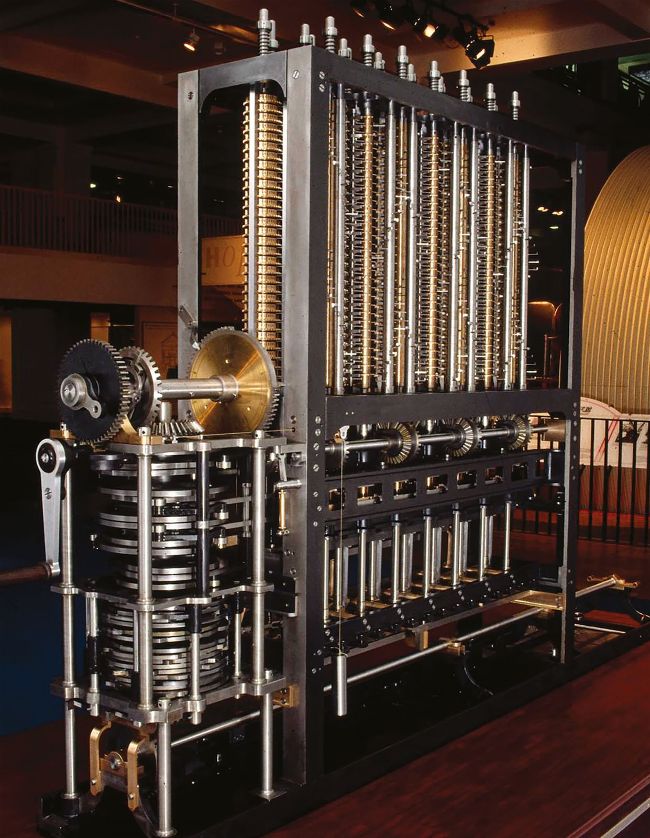
Babbage’s Difference Engine No. 2, built by the Science Museum in London
The history of the modern-day computer is a 200-year journey of technological evolution contributed to by countless inventors and scientists from across the world. One of the pioneering minds on the computer’s timeline was Charles Babbage, an English mathematician that designed several machines to automatically complete complex calculations. In the early 1800s, Babbage was tasked by the British Admiralty with producing an accurate table of logarithms – printed tables used to perform bigger calculations commonly used in navigation – as a former professor of Cambridge University. Having trawled through many existing printed tables, Babbage became disgruntled by the number of comparative errors between them. To remove the chance of human error from creeping its way into these tables, Babbage set out to mechanise the process of creating them. The first iteration of Babbage’s mechanical solution was called the Difference Engine No. 1, the design of which called for a giant handcranked machine that used interlocking gears and large numerical columns to make calculations. With need of an investor to finance his project, the mathematician turned to the British government for support. Babbage’s financial request was granted, and Babbage enlisted the help of engineer Joseph Clement to carry out the machine’s construction. In Babbage’s designs, a fully realised Difference Engine consisted of 25,000 parts to complete its calculations. The machine was designed in two parts: the first was the calculating machine and the second was a printing press to document the calculation.