LIFE-SUPPORT TECHNOLOGY
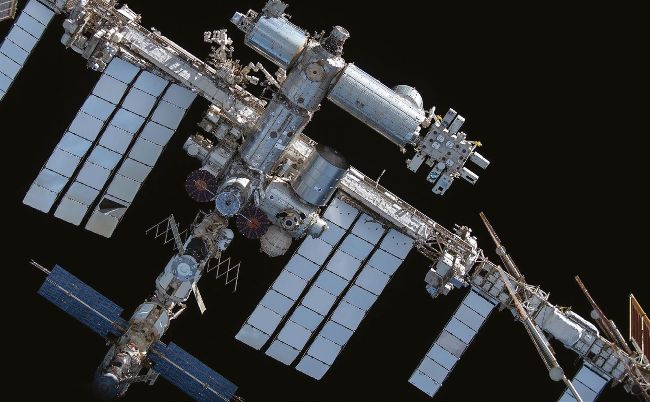
The ISS has an enormous internal volume that has to contain clean breathable air
The air inside the International Space Station (ISS) is kept at a similar pressure to Earth’s atmosphere at sea level and is made up of a similar mixture of gases: around 20 per cent oxygen and 80 per cent nitrogen. The astronauts inside are able to breathe as easily as we can down here on the surface of the planet, and they have been doing so on a continuous basis ever since the ISS was first occupied in November 2000. That’s all thanks to the ingenious technology that maintains a healthy atmosphere inside the space station.
A critical component of any crewed space vehicle is its Environmental Control and Life Support System, or ECLSS for short. This is a complex network of machinery, pipes, tanks and sensors designed to provide astronauts with all the air and other life-support essentials they need. Unsurprisingly, the most complex ECLSS of all is the one found on the ISS, which is required to support its unprecedented internal pressurised volume of more than 900 cubic metres.