These siblings played a pivotal role in the evolution of powered flight and radically altered the path of aviation history
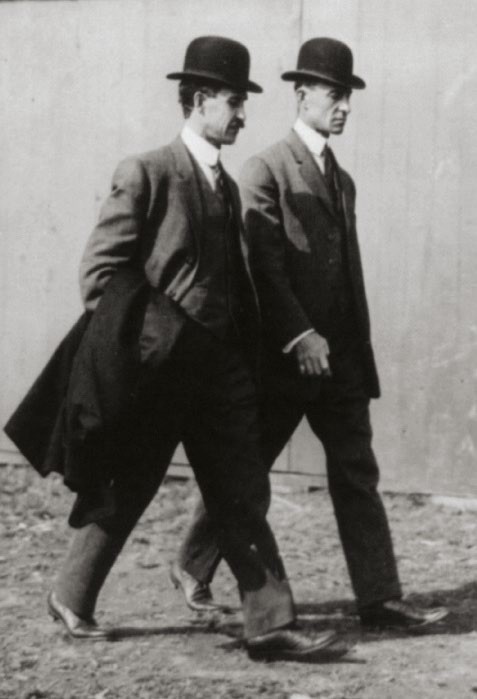
Wilbur (right) and Orville attend the Belmont Park Aviation Meet, NY, in 1910
The big idea
Prior to the Wright brothers’ successful flight (pictured below), many other scientists and engineers had dreamed about and, to varying degrees of failure, attempted to build machines that could not only defy gravity, but do so in a controlled manner. Their failures left the idea of a non-dirigible method of flight as mere fancy, with materials, aerodynamics and energy supplies all seeming insurmountable obstacles.
What is testament to the Wright brothers’ expertise is that they addressed each one of these issues with their aircraft in turn, solving in years what countless minds had failed to address in centuries. Examples include the testing of hundreds of wing designs in a custom-built wind tunnel to determine which shape best granted lift, designing and building their own four-cylinder internal combustion engine that was adapted for air travel, and recognising that propeller blades could be understood as rotary wings.