History behind MIDDLEEARTH
Uncover the events, legends and people who inspired JRR Tolkien’s Hobbit and Lord of the Rings
Written by Jonathan Gordon
“I am historically min ded. Middle-earth is not an imaginary world "
– JRR Tolkien
The world of Middle-earth is the fictional setting of JRR Tolkien’s celebrated works The Hobbit, The Lord of the Rings and The Silmarillion, but within its fiction are many elements of older, historic works. Tolkien was famously a passionate linguist, inventing a number of languages as he built his fantasy world, but he was also a medievalist and a lover of Anglo-Saxon, Germanic and Nordic mythology, all of which fed into his new creation. Just as the languages of Europe fed into Middle-earth, so too did the myths and history of Europe, from the ancient past, even up to his own time, as we’ll explore in this feature. Tolkien soaked it all up and fed it back into his writing. Even the name, as Tolkien pointed out himself, was a modernisation of an Old English word, ‘middel-erd’, “an old word for the inhabited world of men, the oikouménē.”
Elven script: wiki/ Ssolbergj
BEOWULF
The Old English epic poem was a massive influence on Tolkien
c.1000 CE
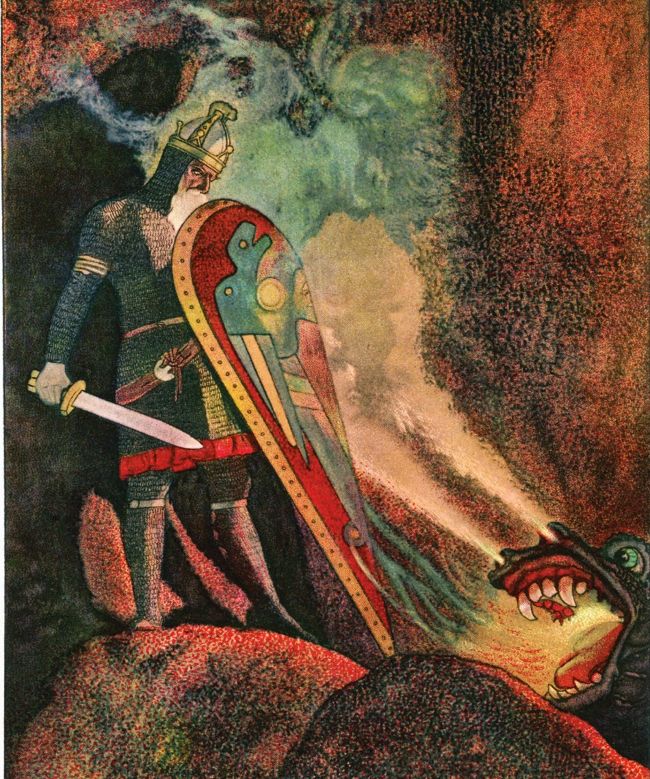
Tolkien was a great admirer and defender of Beowulf, having first read it in its Old English form at King Edward’s School growing up, according to Christopher A. Snyder in The Making of Middle-earth. In 1936 he gave a lecture entitled Beowulf: The Monsters and the Critics, in which he made the case for the epic poem as a literary work deserving of greater academic appreciation. Given his attachment to the tale, it should come as no surprise that many elements of the Beowulf adventure find counterparts in Middle-earth.
The influence is most apparent in the depiction of and interactions with Smaug in The Hobbit. As David Day points out in An Encyclopedia of Tolkien, a thief attempts to steal treasure from the dragon in Beowulf only for the beast to be awoken and attack a nearby community.
All images: © Alamy
ANCIENT EGYPT
A royal lineage for the realm of men
3000 BCE – 332 CE
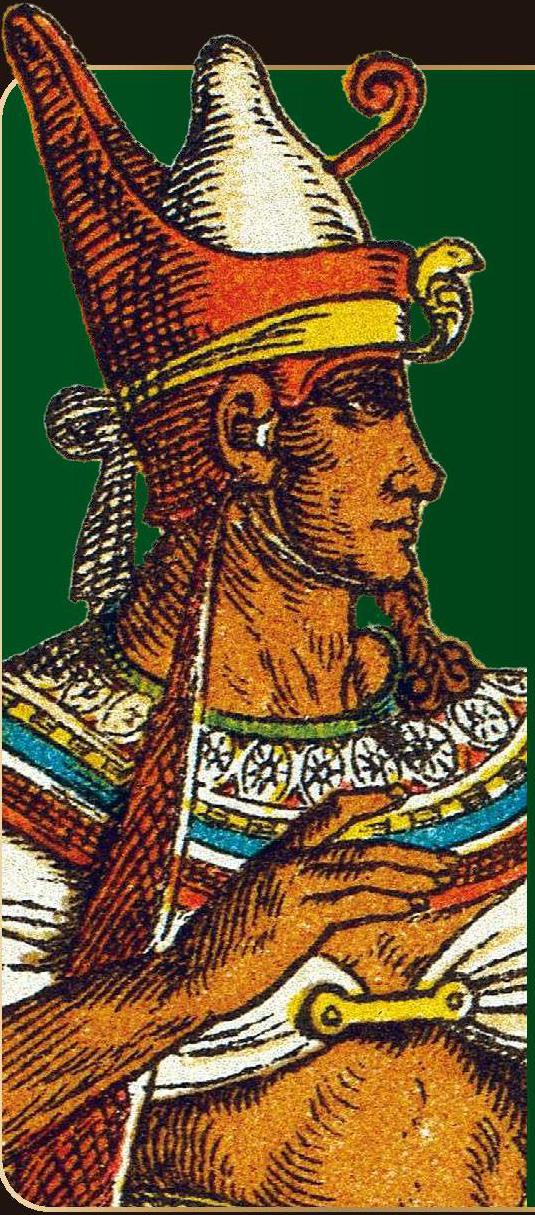
If Middle-earth is a medieval world, it makes sense that its history draws from the ancient world. So it was that the human kingdom of Gondor harked back to Númenor, which Tolkien compared to the ancient Egyptians in a letter to Rhona Beare: “In many ways they resembled ‘Egyptians’ – the love of, and power to construct, the gigantic and massive. And in their great interest in ancestry and in tombs.” Day highlights that Númeróreans, also called the Dúnedain, had a north and south kingdom that was ultimately unified, not unlike Upper and Lower Egypt. Tolkien even went so far as to sketch the double crown of Gondor, the new unified realm. It is not dissimilar from the pschent of the pharaohs, with the Hedjet Crown’s tall design standing out.