KEEPING YOUR COOL
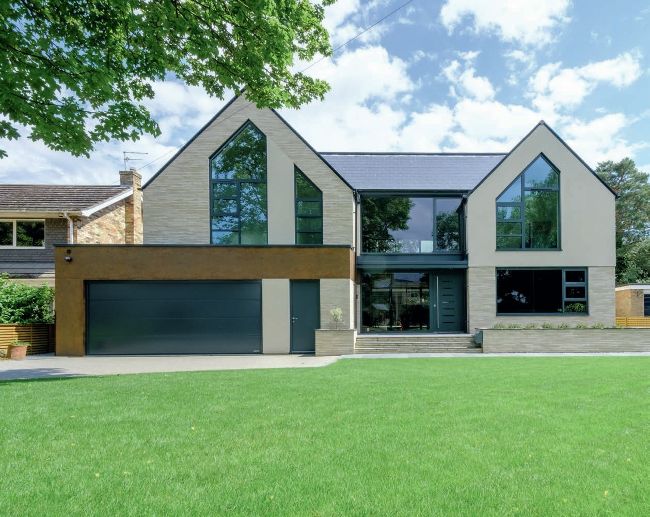
Solar glass with a protective coating can ensure excess heat is prevented from passing through windows into your home. The big windows, sliding glass doors and gable end glazing to this modern house in Cambridgeshire has solar control glass from IQ Glass (
iqglassuk.com). For added comfort, two retractable awnings were installed to the rear elevation providing additional shade and protection for this dog loving family
Summer is on its way and while we spend a great deal of time trying to keep heat inside our homes, there are some months where we want to do the opposite. Overheating can occur in buildings when the sun shines on the facade; heat will pass into the walls, as well as through openings, such as windows and doors, which are less well insulated. Unless that heat is rapidly removed, the building will overheat. This can have several negative consequences, including discomfort and decreased productivity for the occupants.
There shouldn’t really be a need for air conditioning in new buildings and homes in the UK. And that’s because risks associated with overheating should, in theory, have been assessed and designed out at an early stage. Approved Document O of the Building Regulations took effect in 2022, and this covers limiting unwanted solar gain and providing adequate means of removing excess heat from indoor environments.
Over the last few years, weather records have shown that we are experiencing hotter summers more regularly, and so the risk of overheating is increasing. While this shouldn’t be a problem for new homes, existing buildings are another matter altogether. Many older properties were designed and built without regard to the risk of overheating. Instead, the priority might have been to make the best of a beautiful view, achieve a particular shape, or sit in a specific spot on a plot. Thankfully, there are ways to prevent excessive solar gains in existing buildings, which we will be exploring here.