Designing a smart home
Architect Julian Owen shares the inside track on bringing automation into your project
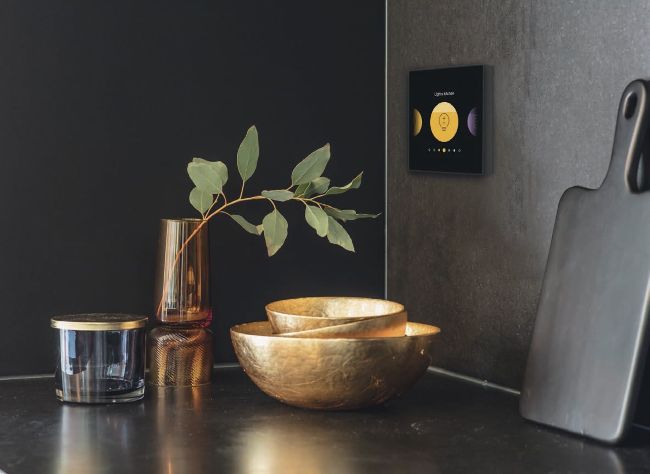
Above: Bagging a 2019 Build It Award, Digital Black from Niko, provided by Moss Technical (www. homecontrol.
uk.com), integrates seamlessly with your home interiors and pairs with a smartphone app
I
magine there is a web of electronic devices and other equipment in your home that you can access from wherever you are in the world. What would it be like if you had a remote control that could direct every component and appliance in the house — from running a bath or turning on the lights, to cooking a casserole and feeding the dog — with just with a few taps on the screen of your phone or tablet? Only a few years ago this tech was the stuff of sci-fi movies. Now, not only is this possible, but some of it is affordable on even a modest budget.
To a novice, it can seem like there’s a bewildering array of smart home options. However, very simple systems can be set up with just a little knowledge of gadgetry and – thanks to modern home entertainment systems – many houses are halfway there already. But if you want something more sophisticated than Alexa and a smart speaker, a specialist supplier will be able to guide you. They can shield you from the overwhelming lists of models and specs available and reduce your risk of being hacked – vital protection for any installation that involves computers.
The Internet of Things is the key concept behind the home automation revolution – where anything electrical is accessible on the world wide web. It is the main reason that smart home technology has become cheap and easy to install. Traditionally, home security and WiFi connections are considered late in the process, sometimes hurriedly put in place once the building is near complete. Nowadays it is essential to ensure these are part of the design brief and considered from the early stages of a project.