HOW TO MIX & MATCH CLADDING
Architect Julian Owen explains the best ways to incorporate multiple finishing materials to create a facade with wow factor
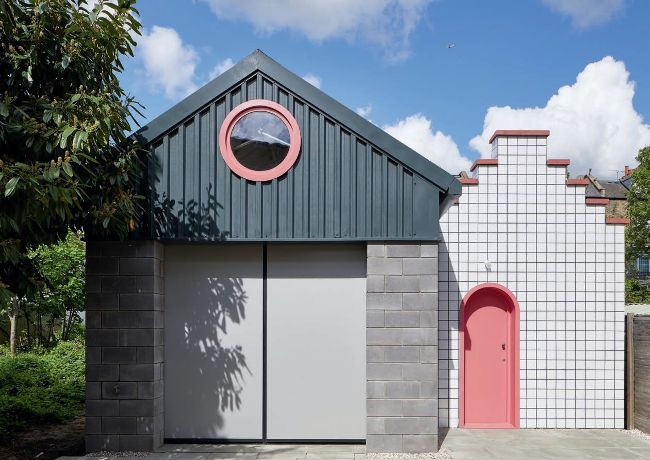
Above: Designed by CAN, this artist’s studio features a striking palette of external materials, including exposed blockwork, corrugated steel panelling and glazed ceramic tiles. Suitable for use inside and out, the tiles are from Grestec’s Cesano Gloss range
ANDY STAGG
Mixing and matching different types of cladding can pep up a design and create something original. It’s a simple way to transform an uninspiring elevation and bring it into the 21st century without breaking the bank. The finish for a new house should be designed at the same time as the layout and form of the building – never added as an afterthought. It can be an expression of the actual construction type, such as brick, or it can be a surface finish that conceals the structure behind. If your budget is tight, pricier materials can be used sparingly to great effect, in combination with something a bit cheaper for the rest of the house.
If your home needs to be a large, simple shape, perhaps due to a limited budget or site constraints, its appearance can be enhanced by varying the surface treatment and breaking down the mass into a smaller scale. Changes in cladding can be used to create contrasts either on a single plane or to pick out different parts of the building. Neutral tones tend to recede whilst colourful surfaces appear more prominent. Darker shades feel more solid and lighter ones look less substantial. These effects, which don’t have to bear any relation to the actual construction, are a useful tool for architects to add more character to a property.