GETTING THE DESIGN RIGHT FOR YOUR EXTENSION
The key to a successful extension project that enhances your day-to-day life is in the design process, says Georgina Crothers
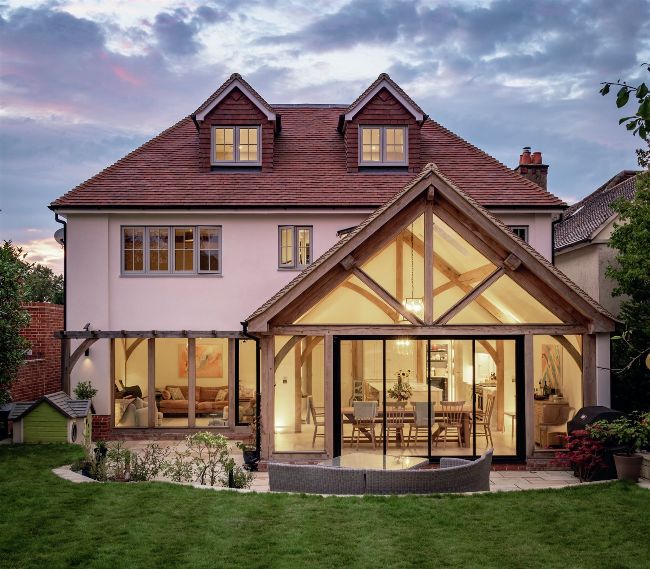
This extension by Welsh Oak Frame (www. welshoakframe. com) blends seamlessly with the design of the original property. The house was renovated as part of the same project, resulting in a unified aesthetic
AGNESE SANVITO / TIM CROCKER
Undertaking an extension project can be a great way to adapt an existing property, whether that’s your current house or one you are planning to purchase. Not only can this type of scheme increase space, but it can improve the functionality of your home and even add value. Nailing the design is crucial to the outcome of your build In this article, I speak to experts about key considerations to bear in mind when developing your plans to ensure your home delivers what you need.
What’s the purpose of your extension?
Before you begin the design process, it’s important to determine why you need an extension. What will the space be used for and how will it improve the overall functionality of your home? “Firstly, see if you can adapt the existing house before thinking about extending it,” says Caroline Shortt, director of Barc Architects. “It could be that an internal alteration gives you what you need.” If your existing space can’t be adapted sufficiently, there’s a range of ways you can increase your floor plan. The best solution for you depends largely on the lifestyle you want. For example, a growing family might need additional bedrooms, so a loft extension may be ideal. If you’re looking for a more sociable space with a better connection to the garden, this could be addressed by adding an open-plan kitchen-diner at the rear.