GUIDE TO BUILDING AN OAK FRAME HOME
From design basics to construction details, Rebecca Foster shares what you need to know about this time-honoured structural system
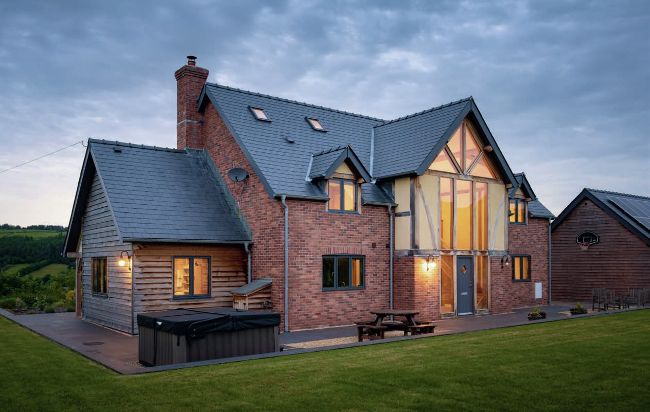
Delivered by Welsh Oak Frame, this handsome oak home features a varied external materials palette including timber weatherboarding, masonry and Tudor-style plaster with oak beams
Thanks to its innate strength and characterful aesthetic, oak has been one of the UK’s favourite building materials for centuries. Today, many self builders are leading the charge by combining modern construction techniques with traditional oak framing to create new homes that are stylish, sustainable, thermally efficient and a joy to live in.
A contemporary oak frame property comprises a structural oak skeleton, including the walling components, roof carcass and floor joists. The individual timber members are usually connected with traditional mortise and tenon joints before pegs are inserted to hold everything together. Historically, the structure would have been infilled with wattle and daub or brick. Today, it’s generally enveloped within an airtight, highly insulated shell to meet modern Building Regulations standards for energy efficiency.
This is achieved by fully encapsulating the frame, within a system of high-performance wall and roof components, such as structural insulated panels (SIPs). The oak frame is then left exposed internally. If you want a traditional look on the outside, plant-on oak can be added as part of the cladding. Some suppliers, like Oakwrights, provide their own insulated panel solutions. “Our WrightWall and WrightRoof encapsulation systems provide a dry shell ina relatively short time and exceed the airtightness and insulation requirements set out by the latest Building Regulations,” says Alex Knowles, head of design at Oakwrights. Full encapsulation isn’t the only solution: in some cases, the oak skeleton will remain exposed and insulating infills or glazed panels used instead (perhaps for a wow-factor gable end).