Photo Active
10 things to shoot, edit or create this month, including motion blur, macro and Hollywood glamour
1 | WILDLIFE
Go ape!
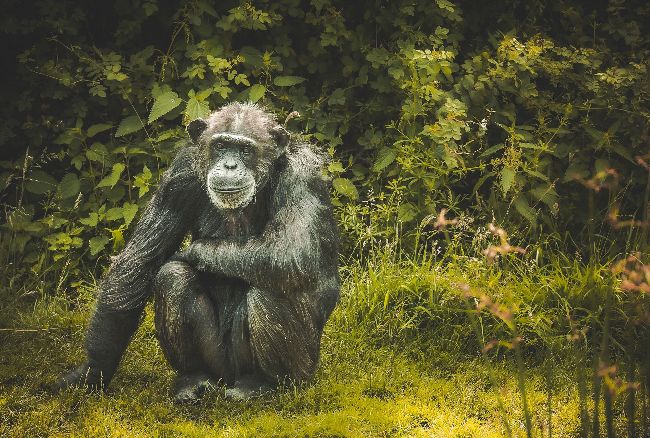
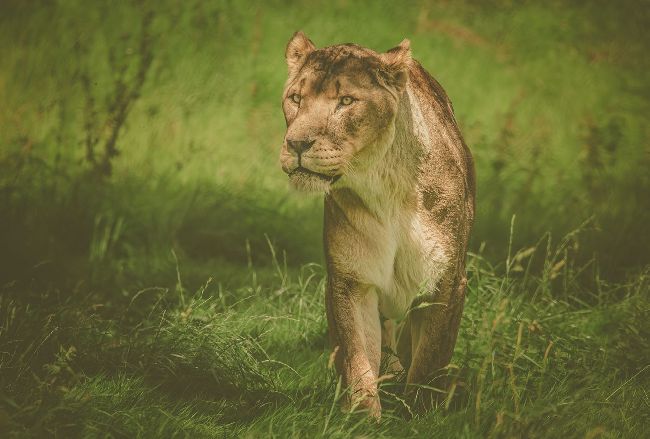
Graham Borthwick uses the local zoo to fill the void of going on safari
10 things to shoot, edit or create this month, including motion blur, macro and Hollywood glamour
Graham Borthwick
A lthough longdistance travel is challenging right now, zoos and wildlife parks are well within reach, and have given me the opportunity to improve my skills while capturing new images for my portfolio. The techniques needed are generally the same as any safari holiday, but with the advantage of knowing the animals are nearby.
Avoiding any distracting elements and observing animal behaviours are the key elements to capturing natural wildlife images, so there is always a need to see outside of the image to seek out the best opportunities. There have been times, for example, when moving away from the fence has provided better images, and permitted me to see the animals move to new and better locations.
My experience of wildlife photography has made me appreciate the world more, and the chance to support endangered animals and conservation programmes gives me a sense of well-being. Instagram: @shadow_shots
Graham Borthwick
1
Technique
Reaching into the enclosure requires a lens with a longer focal length, typically above 200mm. Taking an image up close to the fence with a wide aperture will avoid wire fence distractions, but stepping away can also throw the fence out of focus. These lenses can be heavy, so the use of a monopod or tripod will provide relief and stability.
2 Timing
Observing the animal’s behaviour before taking any images will provide a chance to slow the photography process down, and will assist in seeing obvious distractions that would make any image sub-optimal, enabling better composition. Arriving early to capture animals after the morning feed can lead them to being more active and dynamic.
3 Composition
Seek out areas of shade and light and use these to naturally light the animal as it walks through. Food and playing with an enrichment is a big lure, which make a good focal point to preplan a shot. Try to avoid simple distractions that may appear unnatural (like people, bins and fences), as that will take effort to remove in post-production.
In the bag
As a keen wildlife photographer, my aim is to be as mobile as possible, yet the need to have reach to capture the images without disturbing the animals is key. Coupling the Sigma 150-600mm Sport lens with the low-light performance of my Canon 5D Mk III gives me the greatest chance of success. A recent purchase of the Canon 70-200mm f/2.8 III USM has also enabled me to explore smaller animals, which are less disturbed by my being closer. I have had some recent success with kingfishers.
Crop and clean
During the editing process, do take time to zoom into the animal, in order to remove straw and other hard-to-see unnatural elements from the image. If the shot was taken behind dirty glass, the time-consuming act of cloning can turn a good image into something more powerful.
2 | CREATIVE
Trees in motion
Mike Curry uses ICM for beautiful tree photography

Mike Curry
I f I am ever asked about the influences on my work, I mention things like Spirograph sets, kaleidoscopes and Etch-a-Sketch, which I enjoyed playing with as a child. I think, without realising it at the time, that these toys drew me into the world of abstract art.
I am a big fan of abstract photography. I am noted for my FleetingReflectionsseries, which are abstract reflections of buildings in water; but when I head into nature, I like to experiment with intentional camera movement, or ICM. The technique is quite liberating and akin to using your camera as a paintbrush.
There are many subjects that are suitable for ICM photography, but it works especially well when there are strong linear elements like trees or architectural detail. All weather conditions can work well for this technique, which is why it’s great to try ICM even when the weather isn’t playing ball.
www.mikecurryphotography.com
Try using this different approach
Intentional camera movement is a great way to capture scenes in a personal way; it can even help you to breathe new life into a familiar scene. You might look a bit strange waving your camera around if anyone sees you – but ignore that, it’s a lot of fun! Don’t have any preconceived ideas what the results will be: go for a feeling.