Post Provision
Speaking to Lamin, an asylum seeker directly affected, Chris O’Donnell looks at how the housing crisis hits people exiting the Direct Provision system.
In his capacity as Minister for Justice in 2014, Aodhán O’Ríordáin made headlines stating that reform of the Direct Provision system was a “high priority” for the government. Five years later, little has changed except that Direct Provision centres are now more overcrowded than before. That’s before we even mention those people who went so far as to burn down the Rooskey hotel in January this year rather than see it house asylum seekers. And while the labour market may have been opened up to asylum seekers in 2018, humanitarian professionals have observed this is “20 years overdue”.
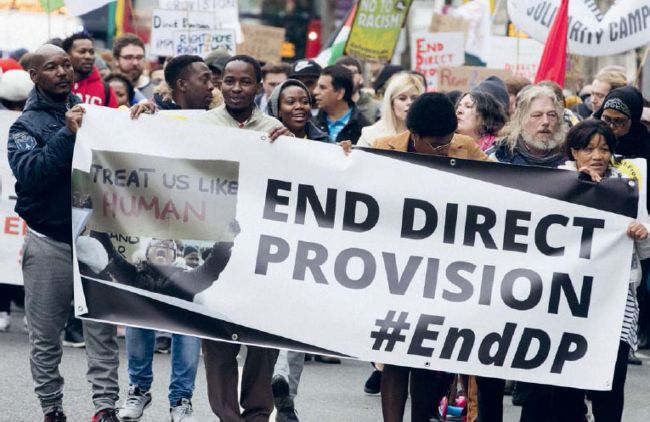
Either way, the grim institutionalised settings of the Direct Provision buildings themselves remain the same. Children play in the corridors with nothing to do and nowhere to go. People have to return to their beds every night unless they get explicit permission to go elsewhere. Our asylum seekers receive a weekly expenditure of €38.80. That amount continues to place all asylum seekers in an economic position of great vulnerability, unable to save or make longer term plans. And it’s those longerterm plans that make the economic future of asylum seekers so precarious which are so crucial to take into account.
Leggete l'articolo completo e molti altri in questo numero di
GCN
Opzioni di acquisto di seguito
Se il problema è vostro,
Accesso
per leggere subito l'articolo completo.
Singolo numero digitale
353
Questo numero e altri numeri arretrati non sono inclusi in un nuovo
abbonamento. Gli abbonamenti comprendono l'ultimo numero regolare e i nuovi numeri pubblicati durante l'abbonamento.
GCN