HOW BIRDS MAKE NESTS
Explore the amazing beakwork of the world’s feathered architects
WORDS AILSA HARVEY
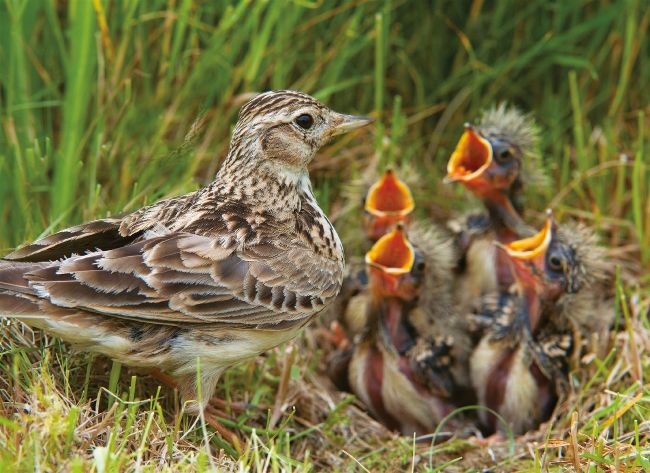
Skylarks nest on the ground, surrounded by high vegetation
There are more than six times as many birds as humans in the world, making up at least 11,000 different species. The characteristics and habitats of these winged wonders are extremely diverse, and because birds come in a range of shapes and sizes, the nests of these animals are also very varied. Cupped nests are the most commonly encountered, which can be distinguished by their cup shape, safely housing newborn birds. Most likely spotted between the branches of trees, birds perch inside this type of nest, made mostly of intertwined twigs.
Other nests are better hidden from animal eyes as birds burrow into the ground, cliffs and tree trunks. These burrow nests provide extra warmth and safety from the environment. Instead of putting in the hard graft required to dig out these spaces, birds with cavity nests use their detective skills to find naturally existing chambers. This could be in the form of hollow trunks utilised by woodpeckers inside cactuses, which are sought out by desert owls.
A species’ main priority for survival will determine which type of nest is built. The stork and bald eagle construct a platform nest to ensure 360-degree views of their surroundings. These vantage points enable the birds to spot predators sooner, and many nests remain in place to be reused across multiple breeding seasons. Some birds are unable to fly, or don’t have the flying ability of high nesters. These include pheasants, turkeys and quail, which need to make their nests directly on the ground. Their homes require tall sides or grassy locations to keep eggs and young birds out of sight.