Inside the DNA of AMD
A new generation of AMD GPUs is here. Amateur genealogist Jarred Walton picks apart the family heritage of RDNA 4.
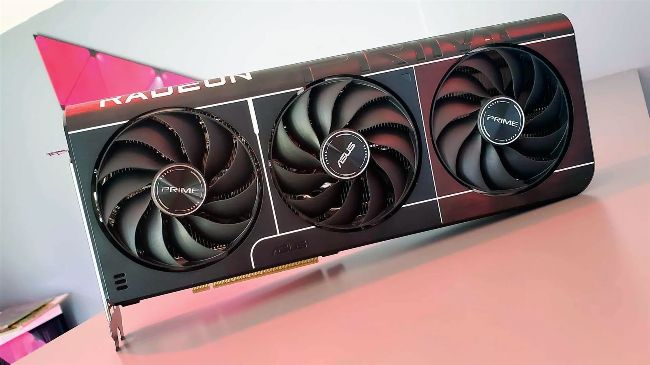
The RX 9070 XT is based on AMD’s new RDNA 4 architecture.
A MD’s brand new Radeon RX 9070 and RX 9070 XT both shipped on 6th March. The AMD RDNA 4 architecture and Radeon RX 9000-series GPUs were partially revealed at CES 2025, except they weren’t part of AMD’s keynote. These will go up against the Nvidia Blackwell RTX 50-series GPUs and the Intel Battlemage Arc B-series GPUs. Like Nvidia’s RTX 50-series graphics cards, AMD’s RDNA 4 launch seems to have been delayed, though perhaps for different reasons.
If you look at graphics card availability right now, what becomes immediately clear is that virtually everything is sold out or, at the very least, seriously overpriced. It seems AMD cleared the RX 7000-series GPUs from shop shelves in December and January. Only the lower tier RX 7600 and RX 7600 XT are still in stock. The result has been dramatically increased demand for everything from mainstream to high-end graphics cards, and Nvidia’s RTX 5090, RTX 5080 and RTX 5070 Ti all sold out almost instantly at launch, so we can’t see AMD supply coping. But enough sad talk.
Let’s check out the specifications for AMD’s RDNA 4 GPUs, talk about architectural updates, and dig into all the other details.
For full specs (see the table, page 51) the RX 9070 column should be fully accurate. We’re reasonably sure there will be a trimmed-down RX 9060 XT using the same Navi 48 die as the 9070 cards, just with fewer CUs (Compute Units) and memory controllers enabled. Below that, things get murky.
Looking at the RX 9070 XT, it uses a fully enabled Navi 48 die that includes 64 RDNA 4 CUs. Combined with a 2.97GHz boost clock and a 256-bit memory interface with 20Gb/s GDDR6 VRAM, the other specs mostly come from straight mathematical calculations. The RX 9070 is mostly the same configuration, just with 56 CUs and a 2.52GHz boost clock – substantially lower than its bigger sibling, though we’ll have to wait and see what real-world clocks actually look like.
Raw compute works out to 48.7 TFLOPS FP32 on the 9070 XT and 36.1 TFLOPS on the 9070. On paper, that makes the XT up to 35% faster. In practice, we suspect the two chips will be quite a bit closer and that the actual clocks in most games may only be a couple hundred MHz apart, despite what the specs suggest.